Alicante’s coastline is really two coastlines in one. South of the city, long golden beaches roll out behind dune systems and pine groves, easy to reach and built for a full day in the sun. North, toward the Marina Alta, the coast turns dramatic: pine-covered cliffs drop into pebble coves so clear they look photoshopped, sea caves carved by centuries of stonecutters, and watchtowers that once watched for pirates. This ranking covers both halves of that coast, and it does not pretend a single scale fits them. A serviced beach is weighed on how well it holds up on a busy Saturday in August; a cove is weighed on how much of its character survives the walk in.
The order is editorial rather than measured, and difficulty of access is treated as a cost rather than as proof of quality. A cove is not better for being hard to reach. It is only quieter, and that is a different thing. Every entry links through to our full guide for that beach, where the parking regime, the barrier dates and the seasonal closures are set out in detail.
The Thirteen at a Glance
The order below is a judgement. This table is not: it is what each of these places actually asks of you before you get to enjoy it, which on this coast is usually the thing that decides where you end up going.
| Beach | Underfoot | Getting in | What decides the day |
|---|---|---|---|
| 1. Cala de la Granadella Jávea | Pebbles, between cliffs over 100 m high | Barrier on 130 spaces, early June to early September. Nothing can be reserved; the charge is per vehicle per day. Tourist train from La Guardia Park once it shuts | Whether the barrier is still open. An early start or nothing |
| 2. Cala del Portitxol Jávea | Gravel shore, flat rock slabs split by channels | Road access. Two restaurants on the shore, unusual for a cove this size | The hour you arrive. One photograph made this cove famous and it has not recovered |
| 3. Cala del Moraig Benitatxell | Gravel and stone. No sand at all | Car at the top, then a steep 300-metre ramp down | The ramp back up, and whether you brought water shoes |
| 4. Isla de Tabarca Alicante | Island beaches and rock | Boat only. 25-minute catamaran from Santa Pola | The ferry timetable. Nothing else here depends on one |
| 5. Cala el Portet Moraira | Real sand, shallow entry | Road to the sand. Free unguarded lot of 50–100 cars, gone by mid-morning in July and August | Arriving before 10:00, or turning the car around |
| 6. Playa de la Fossa Calpe | Fine golden sand, close to a kilometre | Road, large free car park that fills on summer weekends. The Peñón above it needs a separate booking | The day of the week, not the month. Tuesday in August beats Saturday in June |
| 7. Playa de San Juan Alicante | Golden sand, nearly 3 km inside the city | Tram lines run directly behind the sand | Very little. The scale absorbs the crowd |
| 8. Playa del Carabassí Elche | Sand behind an active and fossil dune system | Road, then numbered wooden boardwalks — the only permitted route across the dunes | The wind. It draws windsurfers here for a reason |
| 9. La Cova Tallada Dénia / Jávea | Not a beach: sea cave and quarry with a natural pool inside | Demanding cliffside hike from Les Rotes, or by kayak. Free but compulsory reservation from 15 June to 30 September | Whether you booked. Without it you do not set foot on the trail |
| 10. Playa Mascarat Altea | Pebbles, rocky bed with posidonia | Road, beneath the wall of the Sierra de Bernia | A calm sea, or the Barranco del Mascarat walk instead |
| 11. Playa Paraíso Villajoyosa | Rounded pebbles with patches of sand, over a kilometre | TRAM Line 1 to the Paradís stop, or 100+ unguarded spaces | The car park, not the sand. The length absorbs people; the parking does not |
| 12. Racó del Conill Villajoyosa | Pebbles, split by a central rock formation. Under 100 m | On foot. No rental, no toilets, a seasonal kiosk and nothing else | Its size. There is very little of it to go round |
| 13. Cala Cantalar Alicante | A small strip of sand between flat rock shelves | Tram or bus from central Alicante, then a signposted 400-metre footpath. No car park at all | The day of the week. Come on a weekday, in any season |
Read down the third column rather than the first and the province looks different. Two of these thirteen are governed by a barrier that shuts when it is full, one needs a booking made in advance, one is reachable only by boat, and two more are effectively decided by a car park rather than by anything about the beach. On this coast the question is rarely whether a place is worth visiting. It is whether you can get to it on the day you have.
1. Cala de la Granadella, Jávea
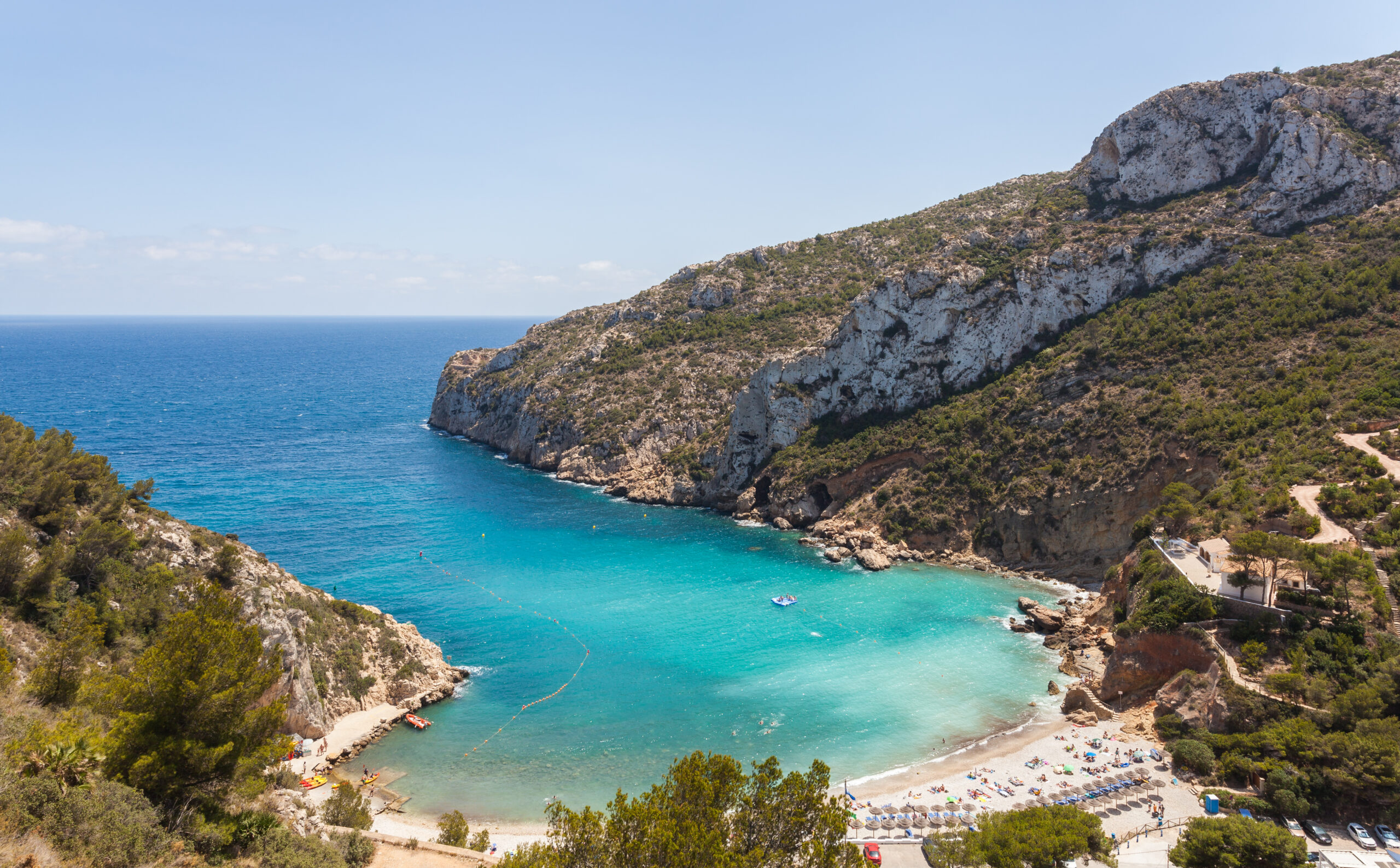
This is the cove Xàbia regulates most tightly, which tells you more about the demand for it than any superlative could. From early June to early September a barrier controls the 130 spaces at the top of the access road, and when they fill, it shuts. Granadella is small and pebbly, enclosed by cliffs over 100 metres high on both sides, and the shelter they provide keeps the water inside genuinely calm — turquoise, still, and often compared to a saltwater swimming pool. The kayak route north toward Cap de la Nao opens up sea caves and hidden bays. The catch is the one already mentioned: nothing can be reserved, the charge is per vehicle per day, and once the barrier drops your options are the tourist train from La Guardia Park or nothing. This is a beach that rewards an early start.
Read the full guide to Cala de la Granadella →
2. Cala del Portitxol, Jávea
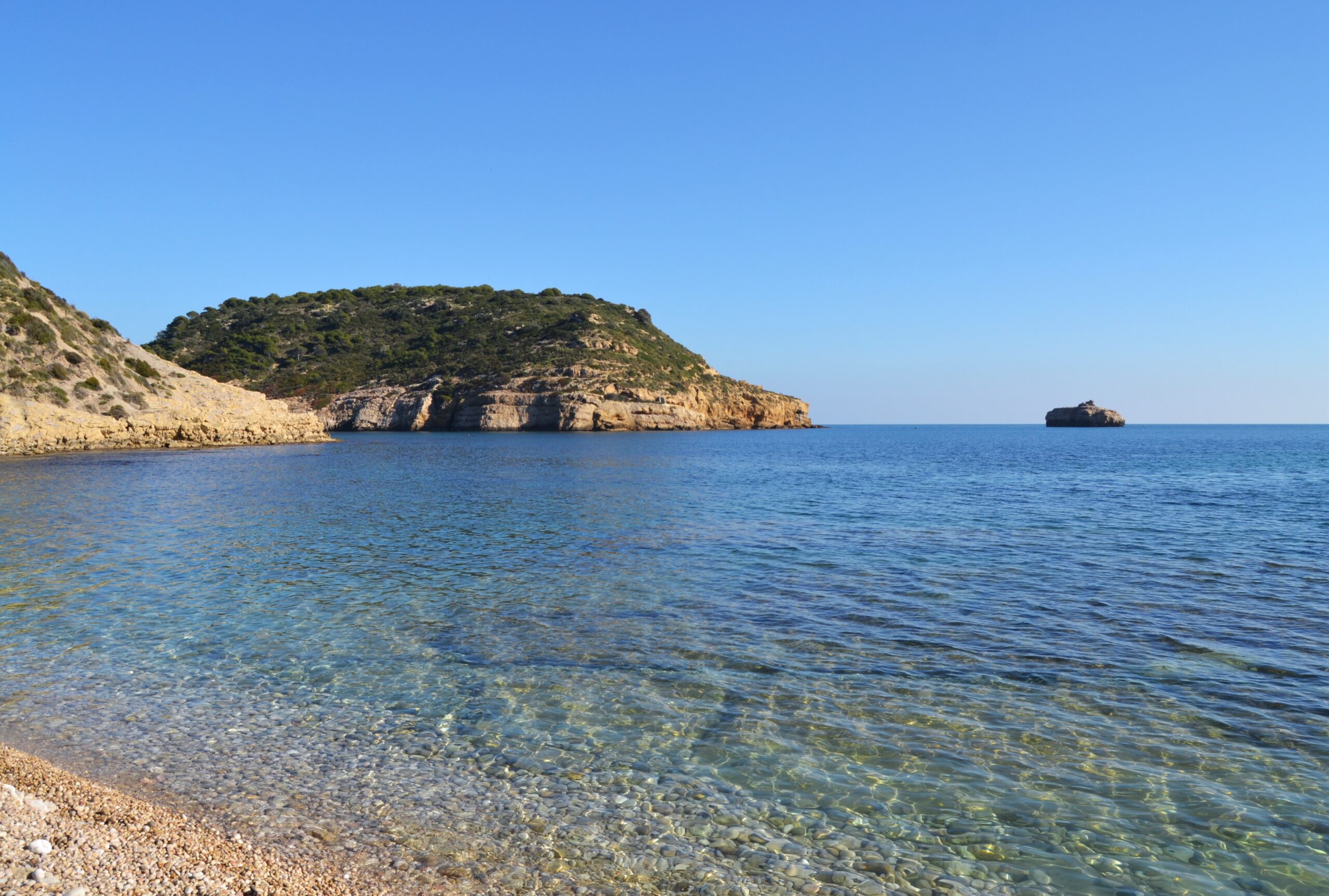
Also known as Cala de la Barraca, this cove built its reputation on a single photograph: a small whitewashed fisherman’s cottage with a bright blue door, framed by turquoise water and a tiny offshore islet. The picture went viral and the cove has been busy ever since. Beyond the famous door the appeal is real — calm, sheltered water, flat rock slabs split by narrow channels that make for excellent snorkelling, and an easy coastal trail out to the Cap Prim headland. Two restaurants sit on the gravel shore, unusual for a cove this size. Arrive at opening time if you want any peace at all in August.
Read the full guide to Cala del Portitxol →
3. Cala del Moraig, Benitatxell
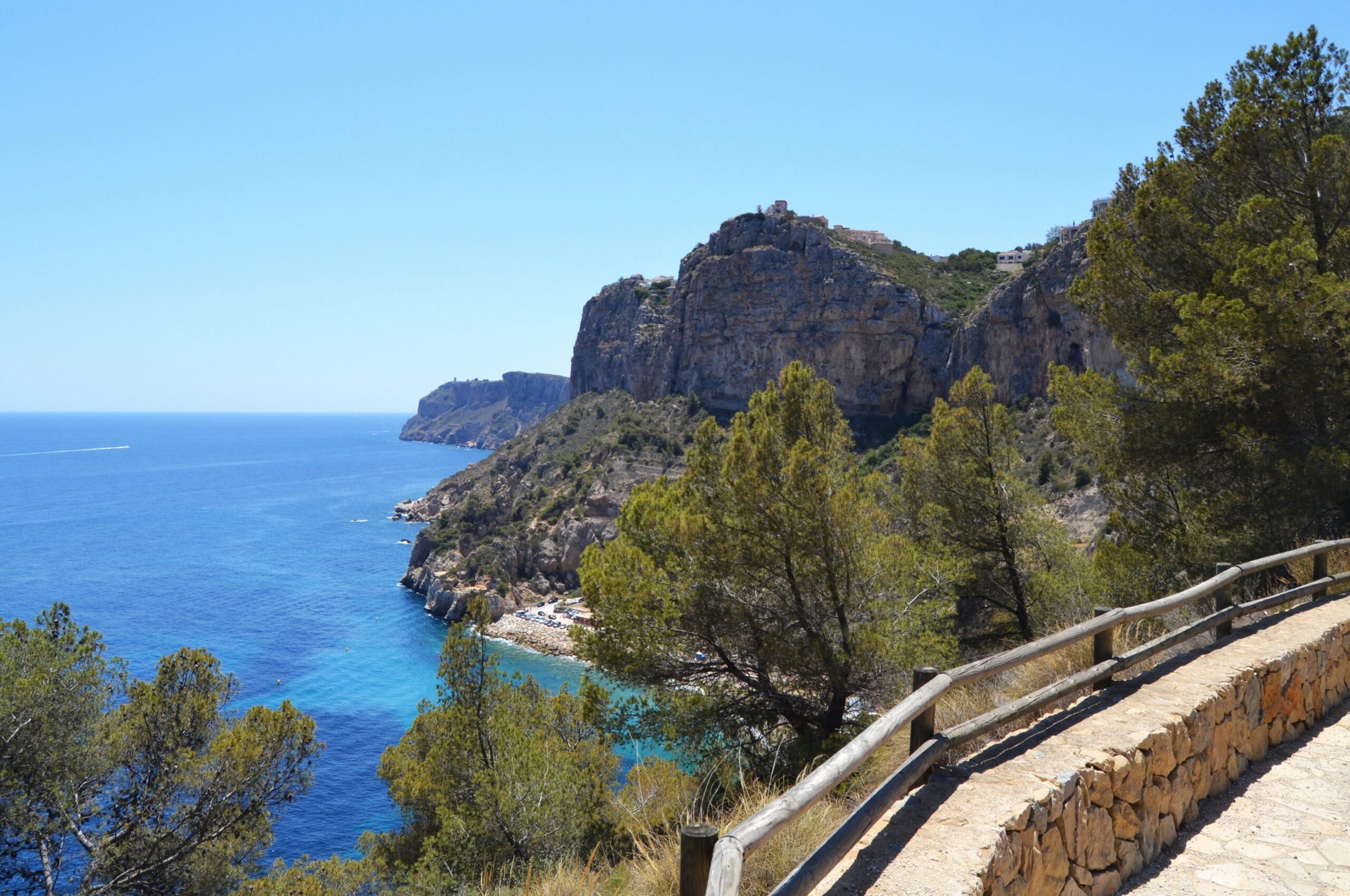
Cala del Moraig has an artificial origin — part of the cliff was blasted away decades ago during construction work nearby — but nothing about it feels man-made today. The real draw is the Cova dels Arcs, a sea cave stretching roughly 150 metres into the rock and doubling as the outlet of the Riu Blanc, the principal discharge of the Benissa aquifer into the sea, where a visible freshwater layer shimmers over the saltwater below. Getting here means leaving the car at the top and walking down a steep 300-metre ramp. Bring water shoes; there is no sand here, only gravel and stone.
Read the full guide to Cala del Moraig →
4. Isla de Tabarca, Alicante
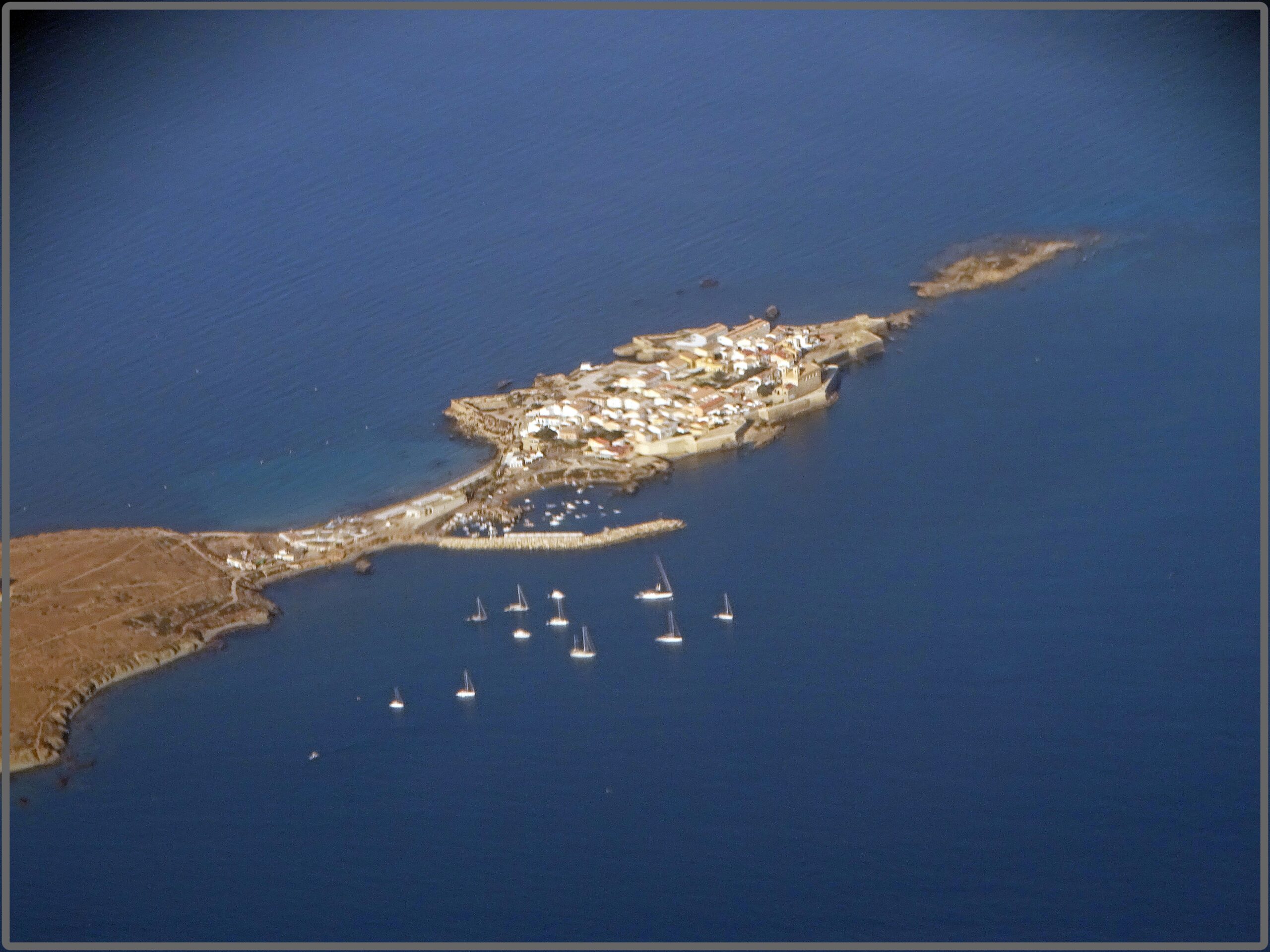
Nothing else on this list is reachable only by boat, and nothing else comes with its own walled eighteenth-century village, a permanent population of around fifty to sixty people, and Spain’s first marine reserve, declared in 1986. The 25-minute catamaran crossing from Santa Pola includes a stop over the reserve for underwater viewing, and once ashore the choice is yours: the fortified old town and its Genoese history, the flat 3.2-kilometre perimeter walk to the lighthouse, or snorkelling the clear water around Cala del Francés. Save room for caldero tabarquino, a rice and fish dish that exists nowhere else.
Read the full guide to Isla de Tabarca →
5. Cala el Portet, Moraira
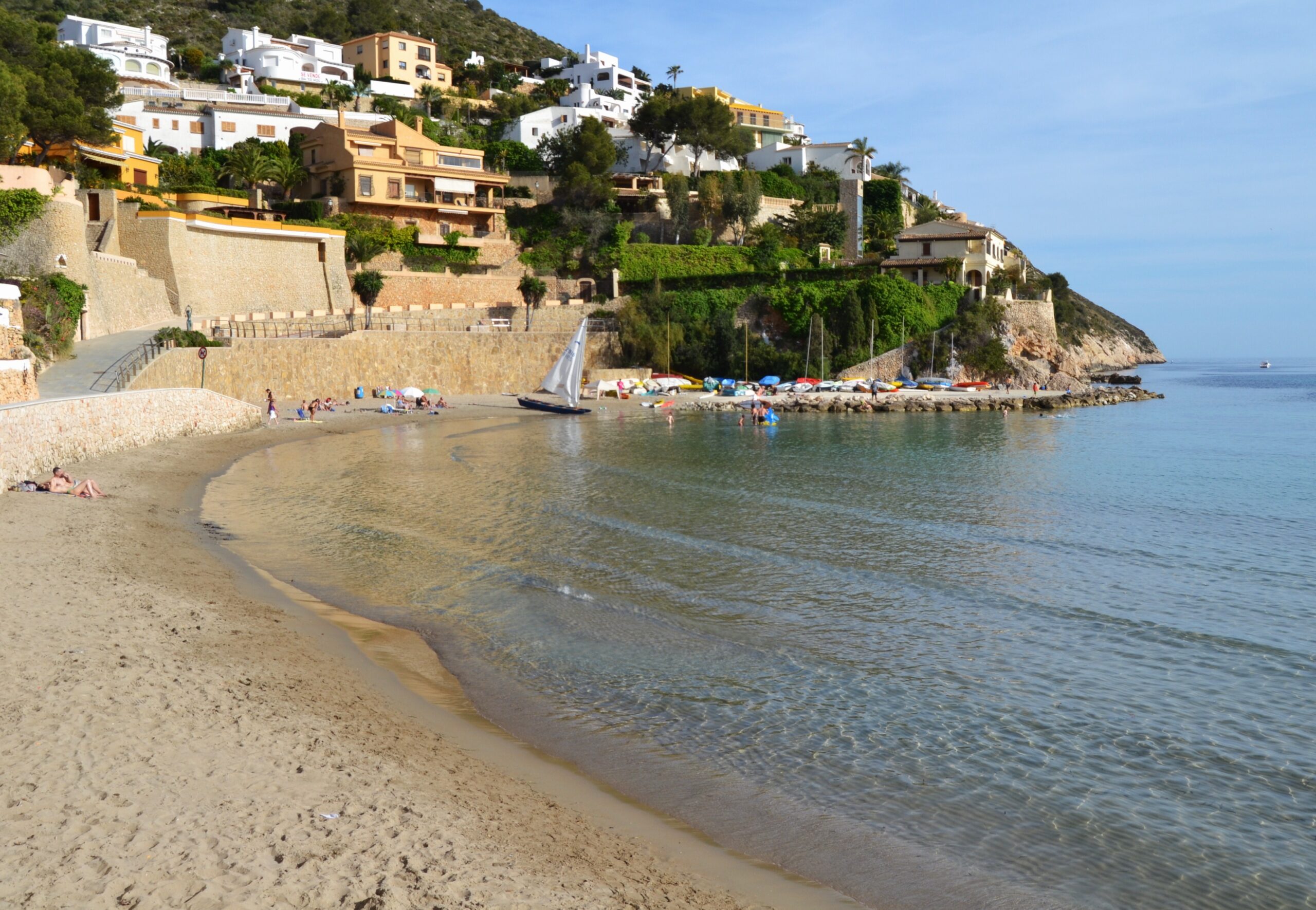
After a run of pebble coves, El Portet is a change of pace: real sand, a shell-shaped bay sheltered by the Cap d’Or headland, and water shallow enough near shore to make this one of the easier beaches on this list for young children. It is also one of the most loved beaches in Moraira, which means it gets packed in July and August despite its size. The hour-long round trip up to the sixteenth-century Cap d’Or watchtower is worth the detour, with views stretching to the Peñón de Ifach, and three restaurants sit on the small seafront for a meal afterwards.
Read the full guide to Cala el Portet →
6. Playa de la Fossa, Calpe
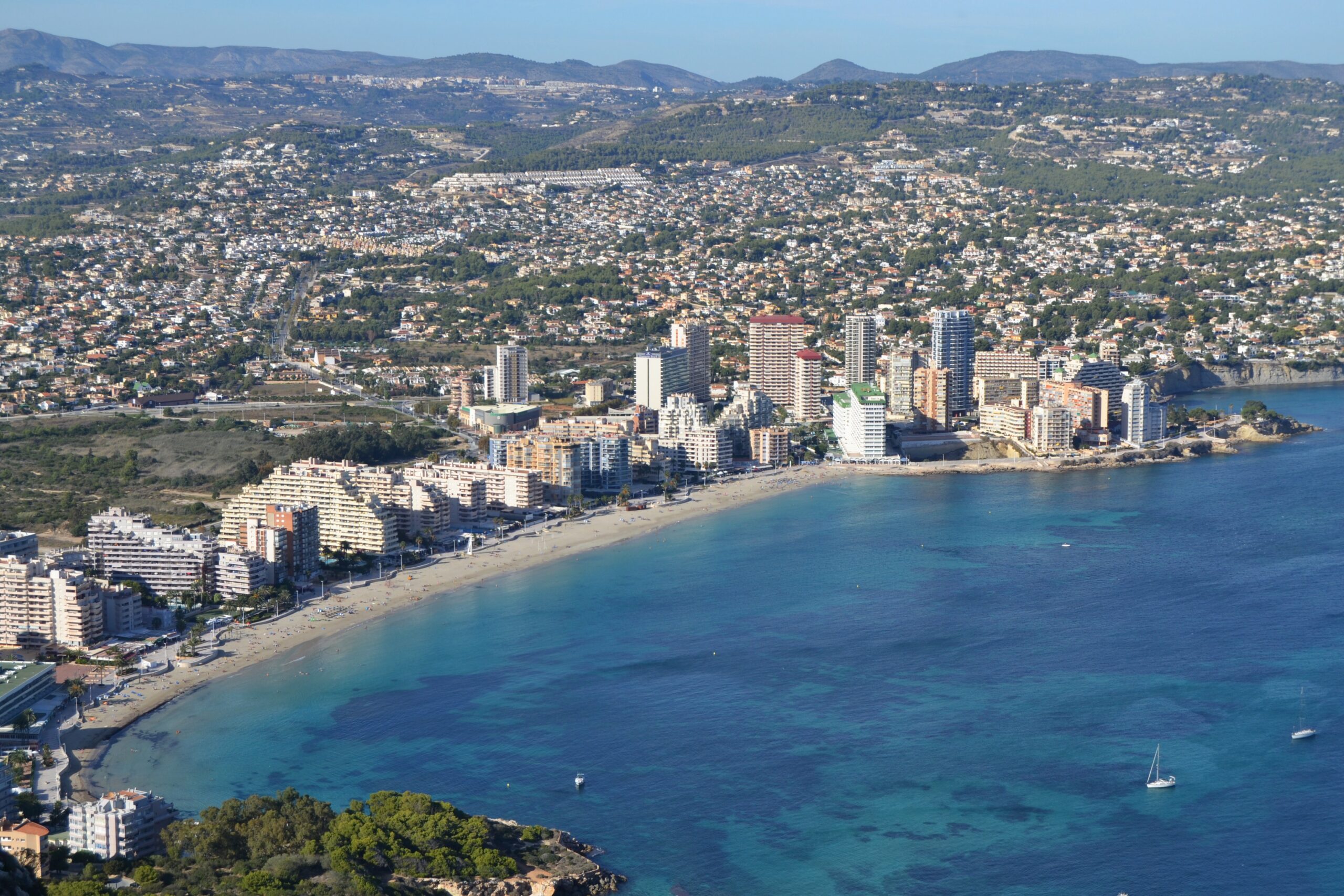
Calpe’s main beach sits directly beneath the Peñón de Ifach, a 332-metre limestone rock that dominates the skyline and turns up in nearly every photograph taken here. Nearly a kilometre of golden sand, calm and sheltered enough to feel almost like a swimming pool, plus a floating platform, kayak and pedal-boat rental, and a promenade dense with restaurants make this one of the most complete family beaches on the Costa Blanca. Head to the quieter southern end, known locally as the Cala de la Fossa, for clearer water and better snorkelling.
Read the full guide to Playa de la Fossa →
7. Playa de San Juan, Alicante
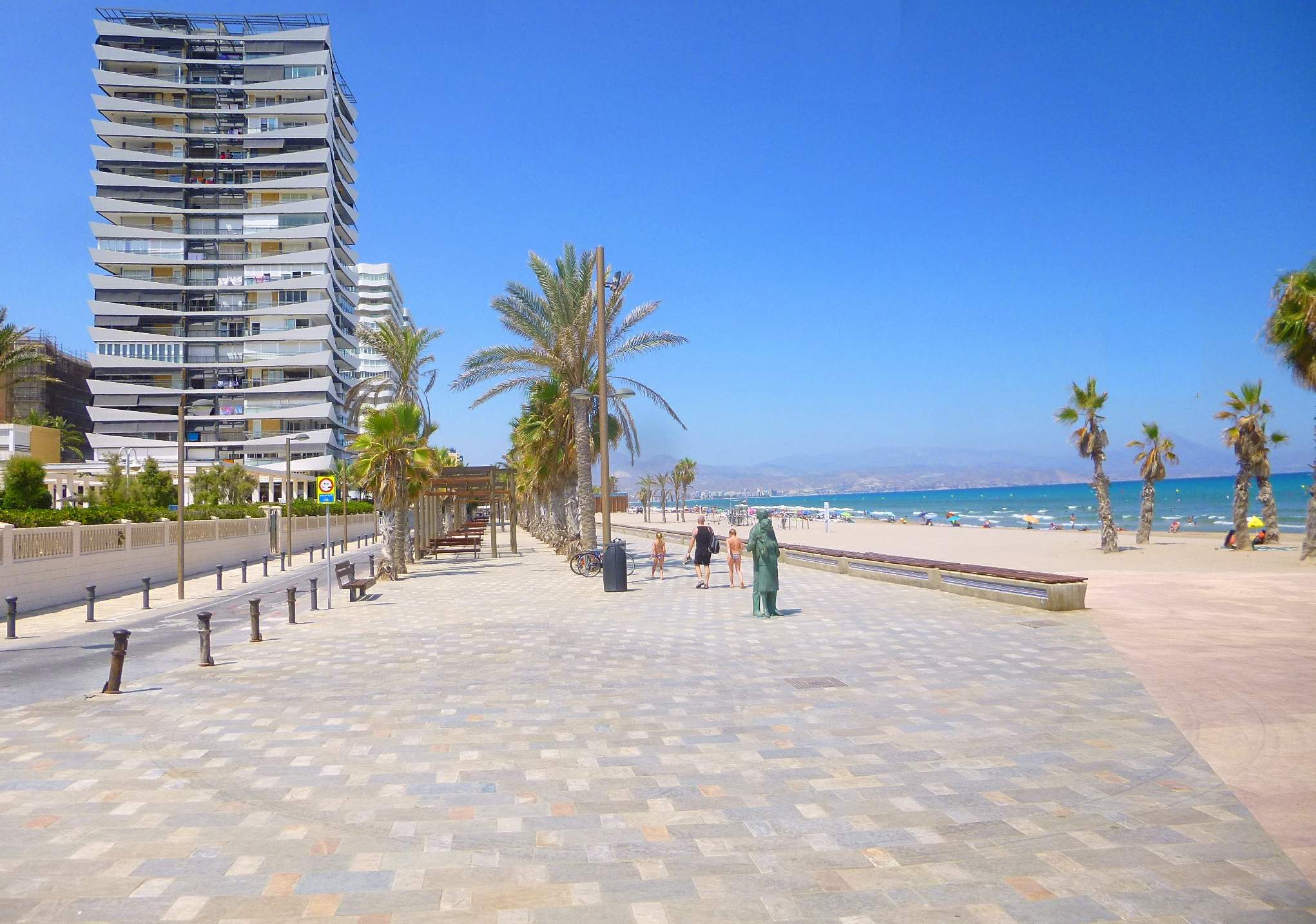
San Juan is the beach Alicante actually uses on an ordinary Tuesday, not just a postcard for visitors. It is one of the longest, widest urban beaches in Spain, with golden sand running for nearly three kilometres within the city limits alone, around twenty beach volleyball courts, windsurfing schools, and tram lines running right behind the sand. The scale means it rarely feels as packed as the smaller coves further north, even at the height of summer, and the shallow, gentle water makes it a practical choice for families. If you want services rather than solitude, this is the one.
Read the full guide to Playa de San Juan →
8. Playa del Carabassí, Elche
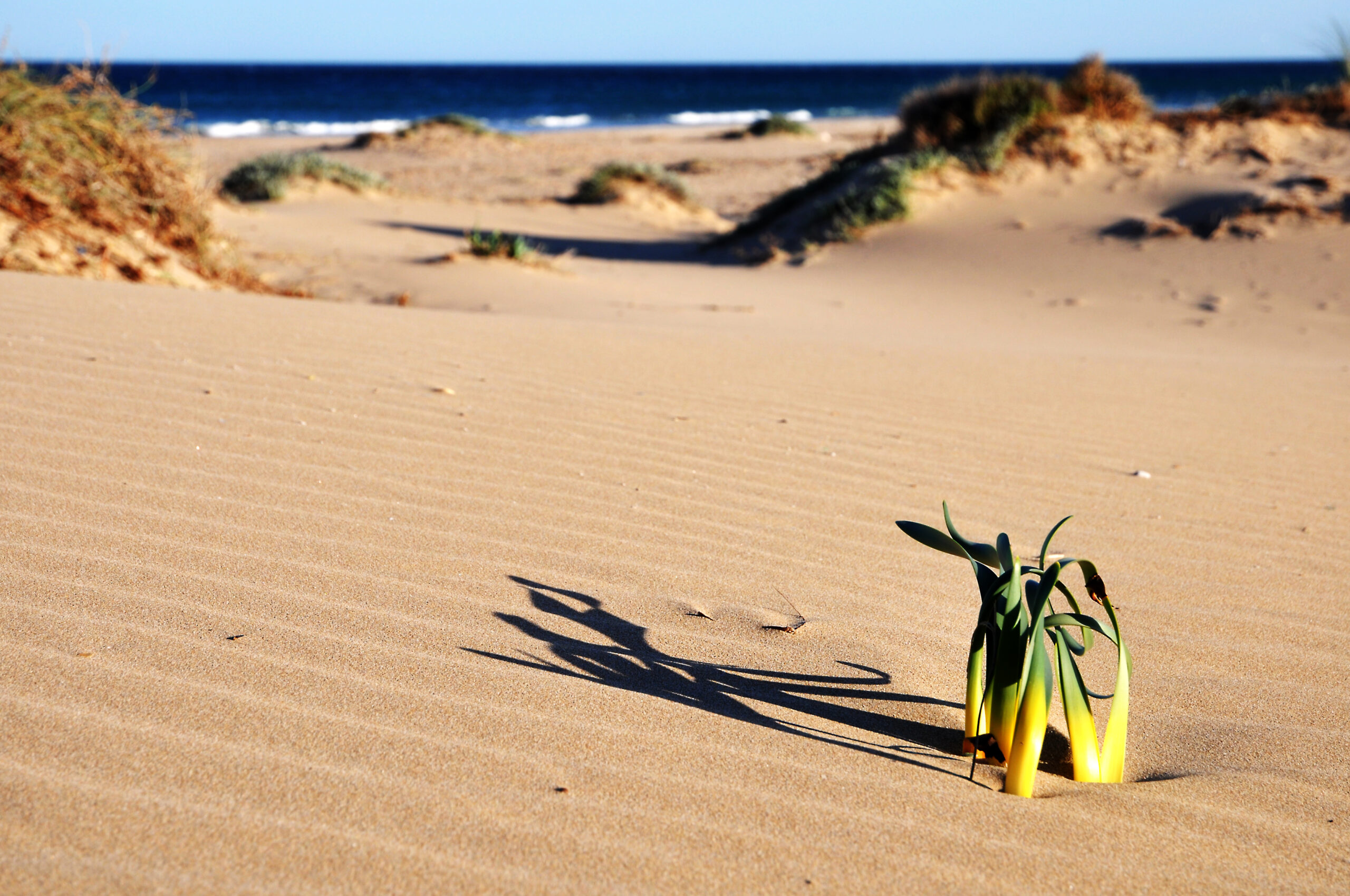
Despite sitting twenty minutes from Alicante’s airport, Carabassí stays genuinely wild thanks to the active and fossil dune system rising behind the sand, protected and crossed only by a network of numbered wooden boardwalks. Pine groves, wetland birdlife and consistent wind that draws windsurfers and kitesurfers add up to one of the more ecologically distinctive beaches on this list. A section toward the south is designated for nudism. Stick to the boardwalks; this is a protected ecosystem, not just scenery.
Read the full guide to Playa del Carabassí →
9. La Cova Tallada, Dénia/Jávea
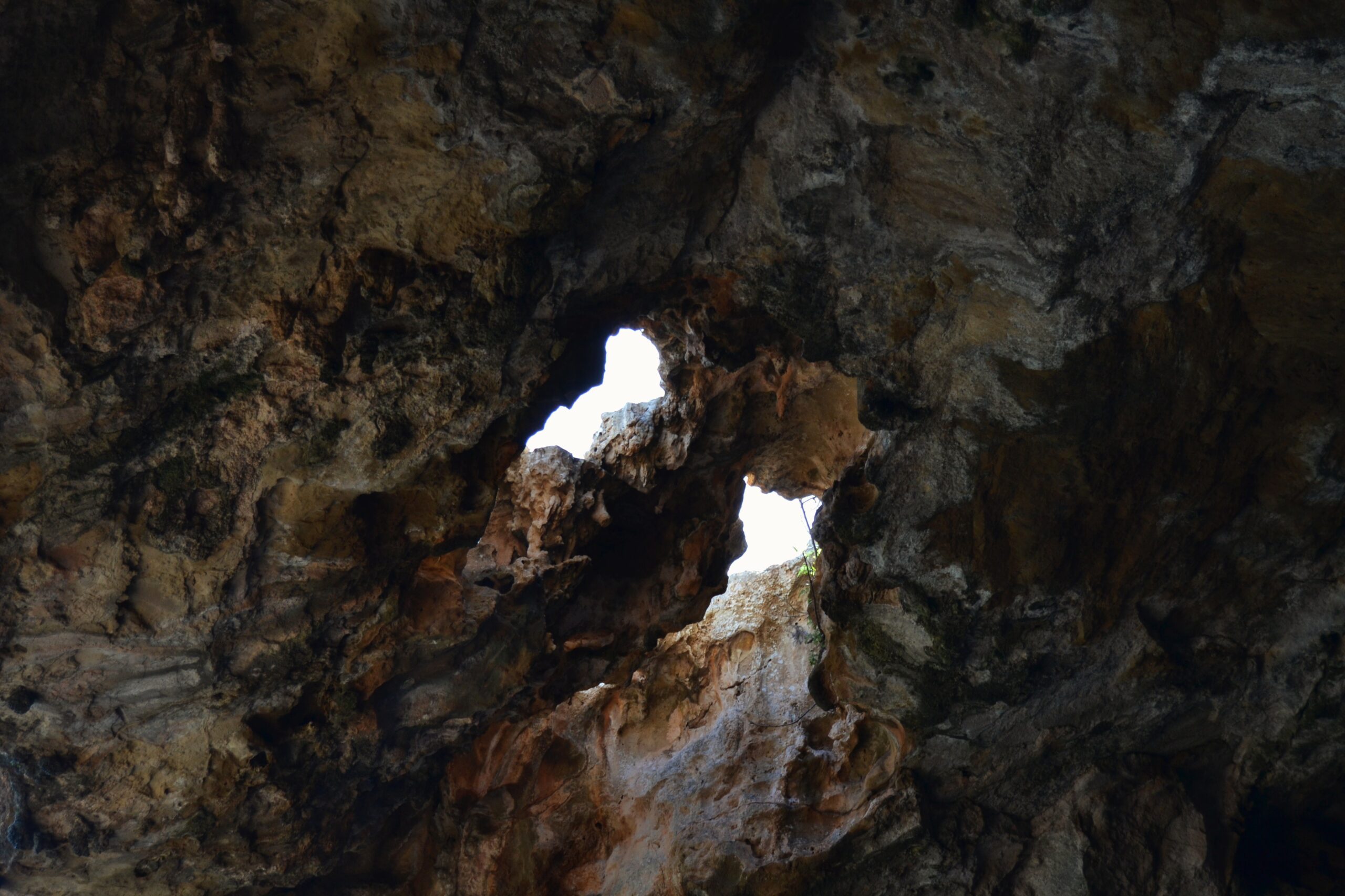
Technically not a beach at all, but too remarkable to leave off. Cova Tallada is part natural sea cave, part centuries-old quarry, with chambers reaching 40 metres high and a turquoise natural pool inside where the sea enters through five separate openings. Reaching it means a demanding cliffside hike from Dénia’s Les Rotes neighbourhood or a kayak crossing, and between 15 June and 30 September a free but mandatory reservation is required just to set foot on the trail. Not for young children or casual visitors — but there is nothing else like it on this coast.
Read the full guide to La Cova Tallada →
10. Playa Mascarat, Altea
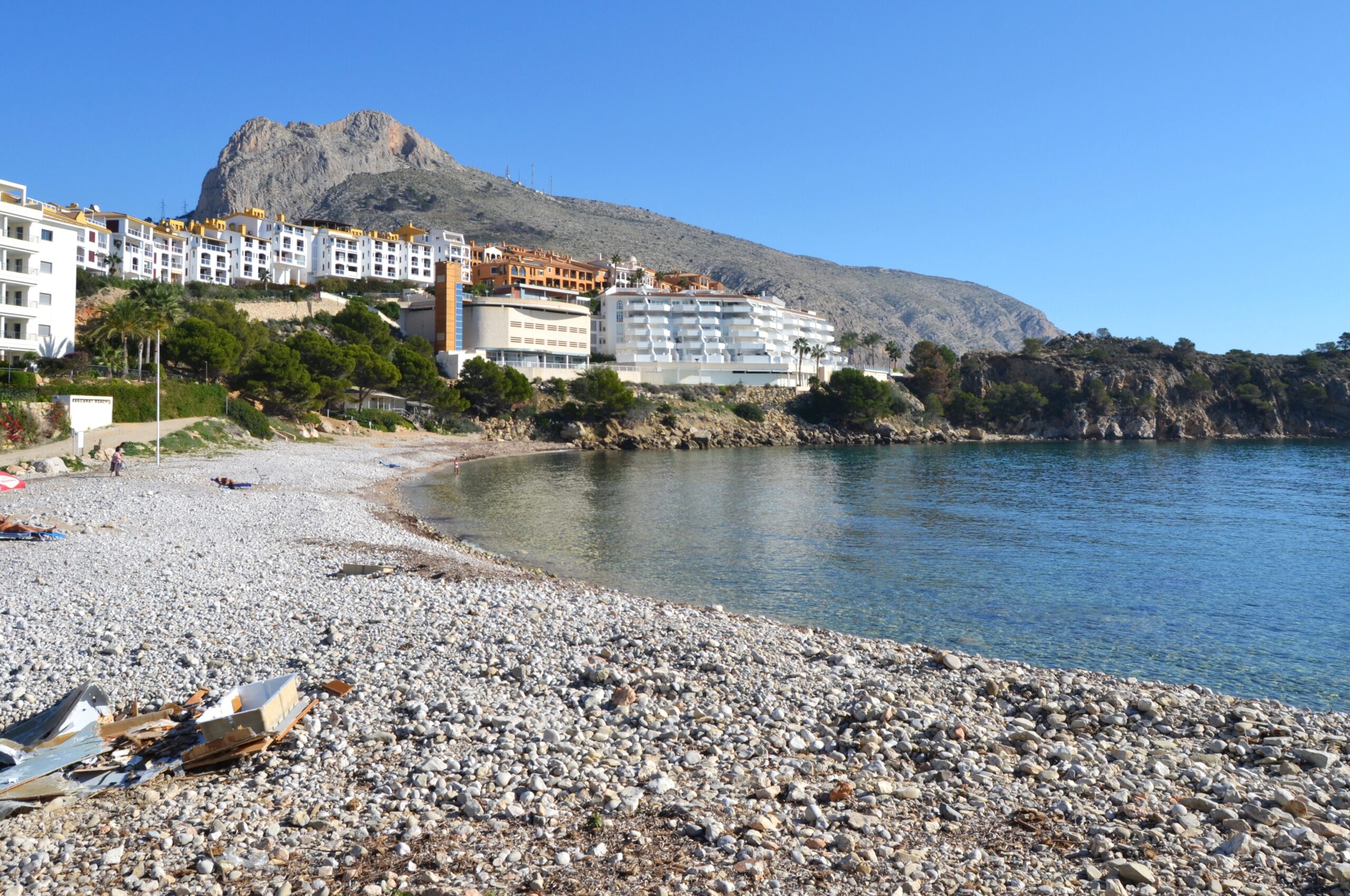
Where Altea’s coast meets the Sierra de Bernia, a near-vertical limestone wall drops straight into the sea, and Playa Mascarat sits at its base. The cove is pebble rather than sand, sheltered by a headland and the adjoining Puerto Campomanes breakwater, with a rocky seabed and posidonia meadows that make for solid snorkelling on calm days. Just inland, the Barranco del Mascarat is a dry riverbed canyon walk that is often the unexpected highlight of an Altea trip. Nudism is permitted on the northern section only.
Read the full guide to Playa Mascarat →
11. Playa Paraíso, Villajoyosa
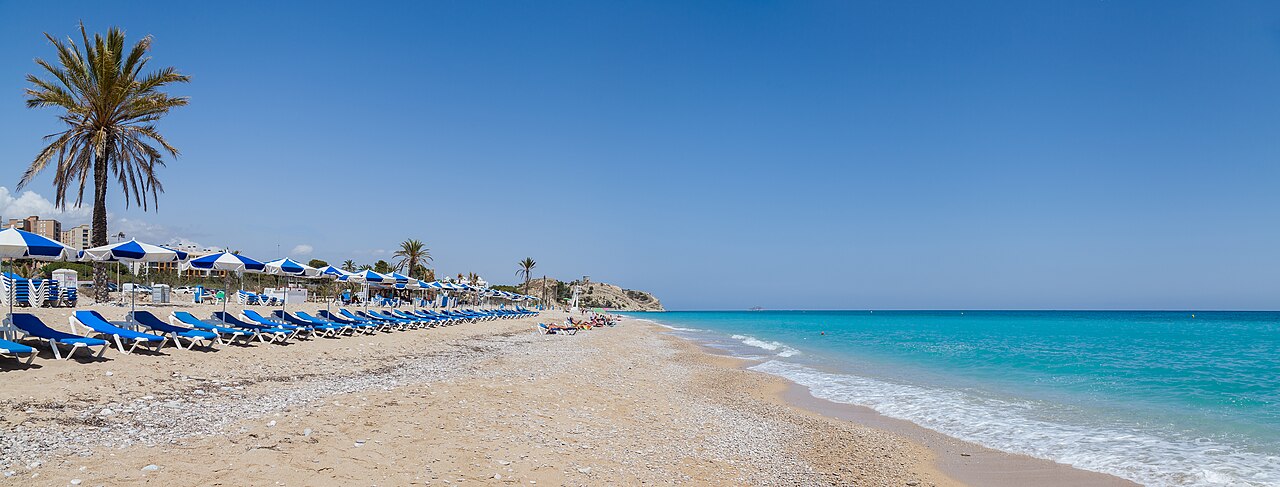
At over a kilometre long, Playa Paraíso is one of the bigger stretches of coast in this part of Alicante, running alongside the Hotel Montíboli and its cluster of smaller, harder-to-reach coves further along. The shore is pebble with patches of sand, the water clear and calm, and the sheer length means it absorbs crowds noticeably better than the smaller coves nearby. A short walk inland leads to La Malladeta, an Iberian and later Roman sanctuary in use from about 375 BC to around AD 80, with a nineteenth-century tower on the summit standing where the last temple stood.
Read the full guide to Playa Paraíso →
12. Racó del Conill, Villajoyosa
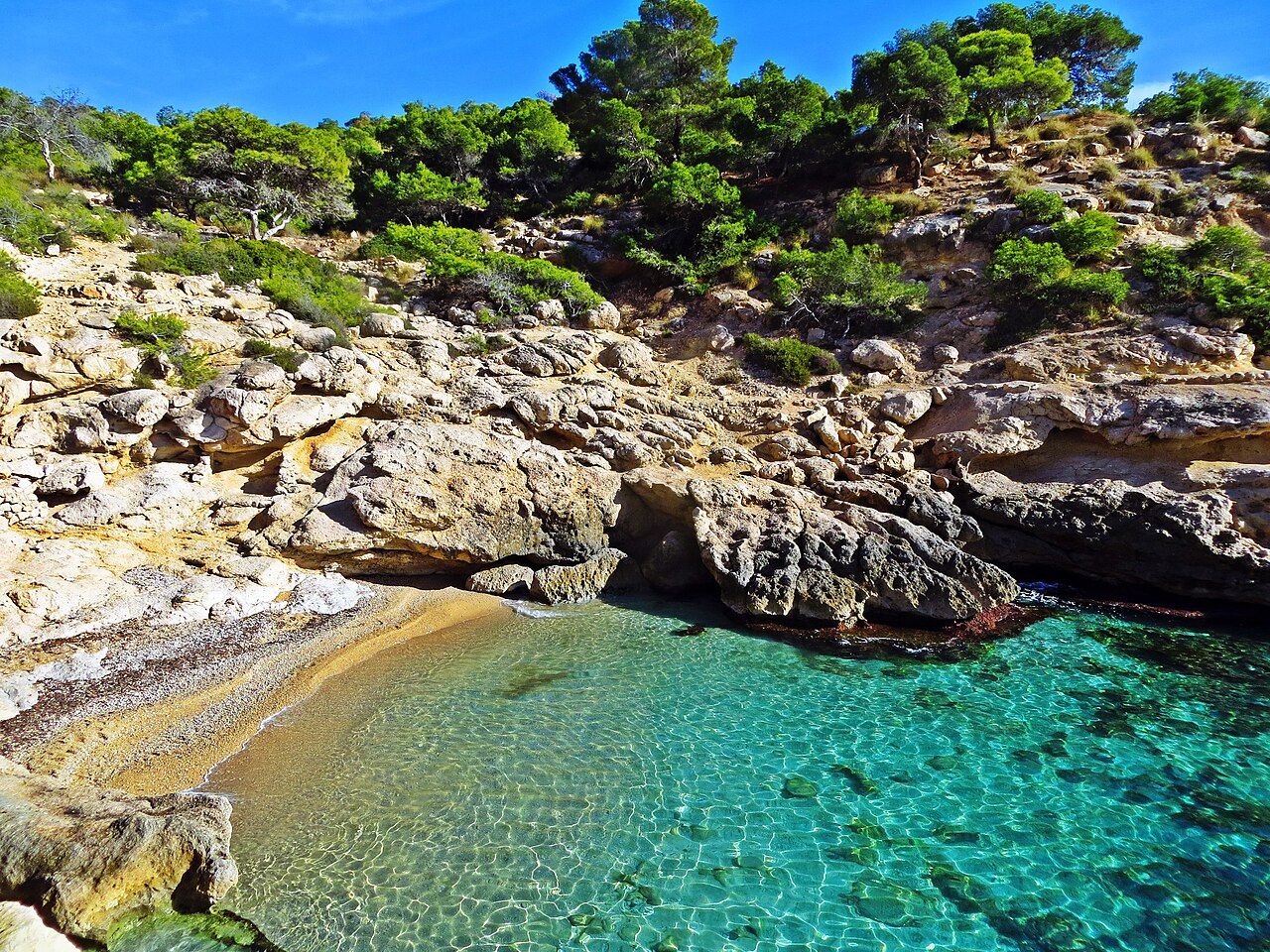
Genuinely tiny — some measurements put it well under 100 metres — but Racó del Conill packs a lot in: a central rock formation splitting the cove in two, water clear enough to rival far more famous coves, and a naturist tradition dating back to the 1970s that is increasingly shared with clothed visitors as the cove’s profile has grown online. There is no rental equipment, no toilets and only a seasonal kiosk, which keeps the atmosphere appropriately wild for a cove that has also doubled as a film location.
Read the full guide to Racó del Conill →
13. Cala Cantalar, Alicante
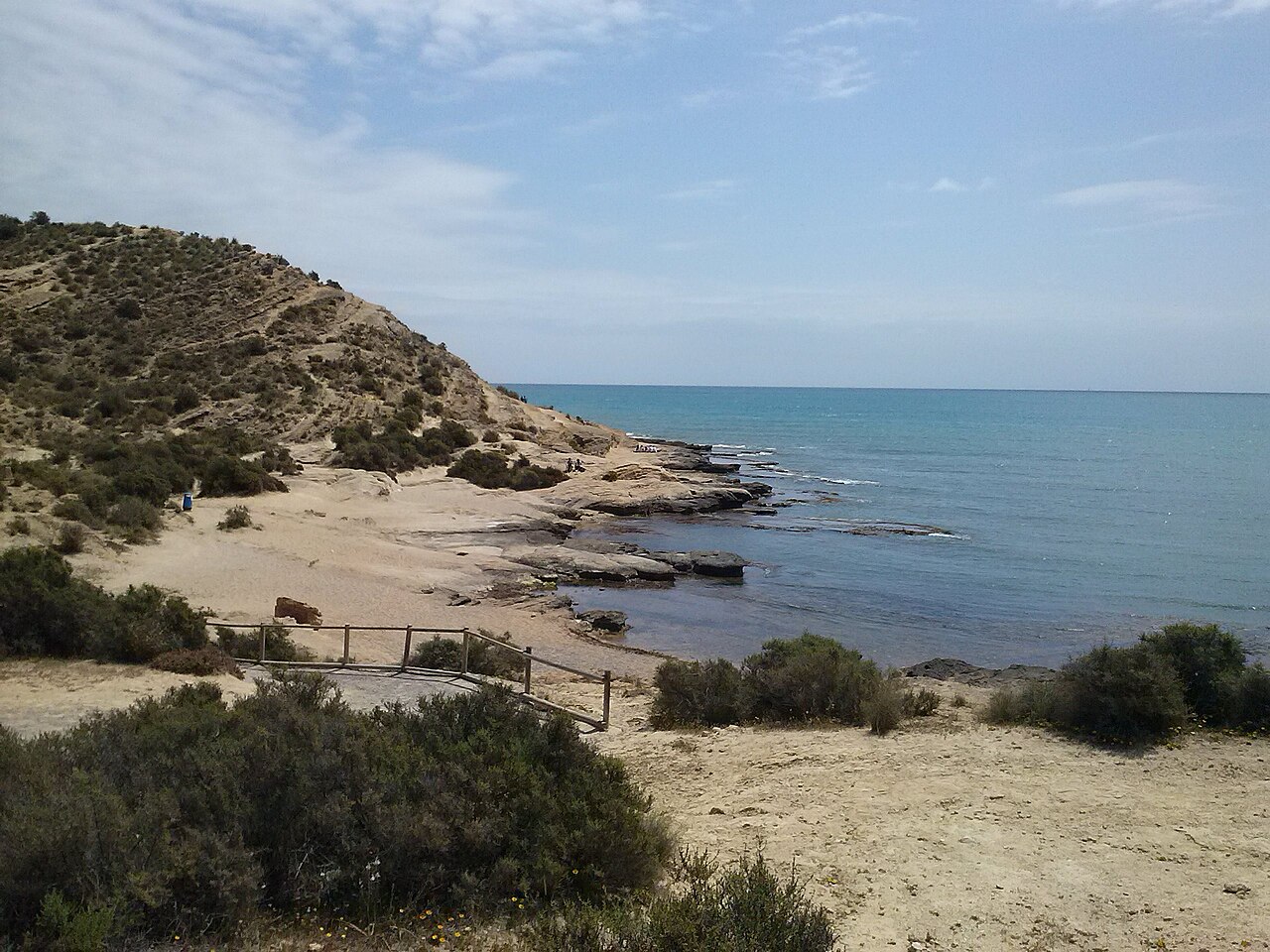
Proof that you do not need to drive an hour out of the city to find a quiet, undeveloped cove. Cala Cantalar sits inside the protected Cabo de las Huertas site — a Natura 2000 Special Area of Conservation, not a marine reserve in the fisheries sense, whatever most pages about it say — a tram or bus ride from central Alicante, with flat rocky platforms flanking a small strip of sand and clear water for casual snorkelling. It is the cove within the city limits that naturists use, though we have not found a formal municipal designation saying so, though clothed and nude bathers share the space without much fuss. No restaurants, no kiosks, just a quiet cove and a coastal path connecting to neighbouring beaches.
Read the full guide to Cala Cantalar →
A Note on Cala Ambolo
Visitors researching this stretch of coast will often come across Cala Ambolo, a cove between Granadella and El Portitxol that was once one of the most beautiful and remote in the area. It has been officially closed to the public for several years because of an ongoing rockfall risk, and we do not recommend attempting to access it. The Mirador de Ambolo viewpoint above the cove remains open and offers an excellent view without any of the risk — see our full guide for details.
Planning Your Trip
Most of these beaches reach their best conditions between June and September, though that is also when parking, access barriers and reservation systems stop being minor details. If crowds matter more to you than warm water, late spring and early autumn deliver nearly the same conditions with a fraction of the competition for space. Whichever beach you choose, check the specific guide linked above before you go: several of these coves have seasonal parking reservations, access restrictions or shuttle systems worth knowing about in advance.
This article is provided for general informational purposes only and does not constitute professional, legal, safety, or travel advice. Beach conditions, access rules, parking systems and seasonal services change without notice; always check the official sources linked in each individual guide before planning your visit. Follow posted safety guidance and lifeguard instructions where available.
Sources
- Beach data. Physical characteristics, lengths, substrate, accesses and services for every beach ranked here are checked against the Guía de Playas, the official national beach register maintained by the Ministerio para la Transición Ecológica y el Reto Demográfico. Source: © Ministerio para la Transición Ecológica y el Reto Demográfico. Where our figures differ from those circulating on other sites, the register is the reason.
- Access rules and parking. Barrier dates, capacity caps, charges and shuttle timetables are set by the individual town halls — Xàbia, Benitatxell, Dénia, Moraira, Villajoyosa, Elche, Altea, Calpe and Alicante — and by the Generalitat Valenciana for protected areas. Each is republished every spring and none of it is fixed. The full detail for each beach, with its own sources, is in the individual guide linked from that entry.
- On the ranking itself. The order is editorial, not measured. There is no scoring formula behind it and we do not claim one. What is verifiable — the access rules, the parking regimes, the substrate underfoot — is sourced in each individual guide. What is a judgement is presented as a judgement.
- A superlative we withdrew from the Moraig entry. Until August 2026 this page described the Cova dels Arcs as the outlet of the longest underground river course in Spain. The claim circulates very widely on tourism sites, but the Instituto Geológico y Minero de España does not make it. What the survey describes is the most scientifically significant gallery of the karst system, and the principal discharge zone of the Benissa aquifer towards the sea through the Riu Blanc — an active submarine spring through which water both enters and leaves. The explored gallery is reported at somewhat over a thousand metres, which would not make it the longest of anything in Spain. The entry now says what the survey says. The same correction has been made in our guide to Cala del Moraig, where it is set out at greater length.
- Cala Cantalar and the word “officially”. This ranking described Cantalar as the only officially recognised naturist beach within the city of Alicante. That naturists use it is not in question; what we could not find is any municipal designation, ordinance or published list naming it as such. A beach being widely known for something is not the same as a town hall having declared it, and the entry now says what we can see. The same wording has been corrected in our full guide to the cove.
Image Credits
All photographs on this page are used under Creative Commons licences or public domain dedications via Wikimedia Commons.
- Cala de la Granadella — Diego Delso, delso.photo, License CC BY-SA 3.0
- Cala del Portitxol — Joanbanjo, CC BY-SA 3.0
- Cala del Moraig — Joanbanjo, CC BY-SA 4.0
- Isla de Tabarca — Jose A., CC BY 2.0
- Cala el Portet — Joanbanjo, CC BY-SA 3.0
- Playa de la Fossa — Joanbanjo, CC BY-SA 3.0
- Playa de San Juan — Zarateman, CC0 1.0
- Playa del Carabassí — Jappy20, public domain
- La Cova Tallada — Joanbanjo, CC BY-SA 3.0
- Playa Mascarat — Joanbanjo, CC BY-SA 4.0
- Playa Paraíso — Diego Delso, delso.photo, License CC BY-SA 3.0
- Racó del Conill — Samu alicante, CC BY-SA 3.0
- Cala Cantalar — Luis Pueyo, CC BY-SA 4.0
Leave a Reply