Search in English for dog beaches in Alicante and you will find the same list of ten places repeated across a dozen sites, usually with no dates, no legal basis and no mention of what happens on the other two hundred kilometres of coastline. That omission is where the money goes. The province has ten or eleven beaches where a dog is welcome, and several hundred where taking one onto the sand in August is a fineable offence.
This guide sets out what the ordinances actually say for the 2026 season: who makes the rule, who enforces it, what the default position is on an ordinary beach, the winter window that most visitors never hear about, and the conditions that apply even on the beaches where dogs are allowed — which is where most fines are actually issued.
What This Guide Covers
- Who actually makes the rule
- The myth that will cost you money
- The default rule on an ordinary beach
- The winter window nobody mentions
- The dog beaches in Alicante, municipality by municipality
- The conditions that apply even on a dog beach
- What the fines actually are
- Our own guides, and where dogs stand
- How to check before you go
Who Actually Makes the Rule
Every beach in Spain belongs to the state. Under the Ley 22/1988 de Costas, the shore is dominio público marítimo-terrestre — public maritime-terrestrial domain — which cannot be owned privately and cannot be closed to the public. That much is true, and it is the foundation of the whole Spanish beach system.
What people then get wrong is the next step. Article 115 of the same law hands a defined set of competences over that state land to the coastal municipalities. Among them: keeping beaches and public bathing places in proper conditions of cleanliness, hygiene and public health, and policing observance of the rules issued by central government on rescue and the safety of human life. Every coastal town hall in Alicante province exercises those competences through a municipal beach ordinance, and several also run a separate animal-keeping ordinance that covers the same ground from the other direction.
Enforcement falls to the Policía Local. Under Article 53 of the Ley Orgánica 2/1986, local police forces hold administrative police powers in respect of municipal ordinances, bye-laws and other municipal provisions. Some towns go further and assign officers to the beaches specifically: Guardamar del Segura’s beach ordinance states that during the bathing season its beaches will have Local Police agents dedicated exclusively to them, to enforce everything the ordinance provides.
The Myth That Will Cost You Money
There is a claim that circulates widely in Spanish-language forums and gets translated into English on expat pages every summer. It runs roughly like this: beaches belong to Costas, not to the town hall, therefore the local police have no jurisdiction on the sand, therefore any fine for taking a dog onto a beach is void.
The first half is correct and the conclusion does not follow from it. Ownership of the land and competence to regulate its use are separate questions, and Article 115 settles the second one. You can certainly appeal a fine. What you cannot do is treat the sign at the top of the access path as decorative.
The practical test is simple. If a town hall has published an ordinance, signposted the beach and put officers on it, you are going to be asked to leave and you may be reported. Whether you would ultimately win on appeal is a question for a lawyer and several months of your life. It is not a plan for a Tuesday in August.
The Default Rule on an Ordinary Beach
Take the city of Alicante as the worked example, because its ordinance is published in full and is unusually explicit.
Article 29 of the city’s Ordenanza Municipal sobre Tenencia, Bienestar y Protección de los Animales states that, other than on beaches expressly authorised for dogs, access by animals of any kind to beach sand is prohibited all year round. Not during the bathing season. All year.
The city’s older beach-and-coves ordinance approaches it differently, prohibiting animals on beaches and coves within the bathing season, with an exception for rescue dogs and assistance dogs for people who need them. Most towns in the province follow that second, narrower pattern: banned in season, tolerated or unregulated out of it. Dénia’s beach ordinance carries a whole title devoted to the presence of animals on beaches, which is a fair indication of how much administrative attention the question gets.
The consequence for a visitor is the same either way. Outside the designated dog beaches in Alicante province, the working assumption on any beach between roughly June and September should be that your dog is not allowed on the sand, and that assistance dogs are the standard exception.
The Winter Window Nobody Mentions
Here is the part that almost never makes it into English-language guides, and it is the single most useful thing in this article for anyone who lives on this coast rather than visiting it for a fortnight in July.
Alicante’s animal ordinance opens a door immediately after closing it. Exceptionally, dogs may access the beaches in the period between 1 November and 1 March, both inclusive, provided the safety and health measures are respected: on a lead, muzzled if necessary, and with any mess picked up.
Four months of the year, on the city’s ordinary beaches, a leashed dog is lawful. That is a materially different proposition from the ten dog beaches, because it opens up the long urban sands rather than a 250-metre strip.
Two warnings. The window belongs to the city of Alicante’s ordinance and does not automatically exist in Dénia, Xàbia, Calpe or anywhere else — each town writes its own dates, and some write none at all. And a lead is not optional inside the window; the exception is conditional on it.
The Dog Beaches in Alicante, Municipality by Municipality
Counts published for 2026 range between ten and eleven, depending on whether a source treats El Campello’s two stretches as one entry or two. Running north to south, these are the designated places.
- Dénia — Escollera Norte. A small sandy area next to the town and the port breakwater. Quiet, close to everything, unspectacular.
- Altea — Platja de l’Olla. Not a dedicated beach but a signed stretch of over 300 metres within a much longer one, north of the El Arrecife beach bar at the height of Villa Gadea and before the Porto Senso marina. Pebbles. Shared with people who have no dog, which changes the etiquette.
- Calpe — Cala Les Urques. In the south of the municipality, a rocky cove in near-natural condition. Cobbles rather than sand, which suits some dogs and not others.
- Villajoyosa — El Xarco. The right-hand portion of a small beach south of the town. Gravel and stone, moderate swell, frequently windy, awkward to reach, and consequently one of the least visited dog beaches in the province. No services at all — bring water and shade.
- El Campello — Punta del Riu Sec. The first dog beach in the province, at the mouth of the Riu Sec between Carrer la Mar and Muchavista. A dog park sits about 500 metres away.
- El Campello — Platja del Barranc. Beside the mouth of the Riu d’Aigües, reached past the Lloma de Reixes naturist beach.
- Alicante — Playa de Agua Amarga. The best equipped of the lot, and the one usually called Doggy Beach. Around 250 metres of fine sand in the south of the municipality, between the city and Urbanova, designated in 2016. Adapted cleaning service, dedicated bins, showers, tie points and a fenced dog run. It sits immediately beside the Saladar de Agua Amarga, a wetland of real ecological value, which is exactly why the boundaries are marked and worth respecting.
- Santa Pola — Caleta dels Gossets. Below the lighthouse viewpoint on the Cabo de Santa Pola, one of the small coves in the Calas del Cuartel strip beneath the cliffs. Designated since the summer of 2016 and consistently the best regarded dog beach in the province. Sand, gravel and rocky bottom.
- Torrevieja — Cala del Rocío. Among the better equipped on this coast.
- Orihuela — Cala Mosca II. The municipality’s only dog beach. A small natural cove mixing sand and rock, quieter than most of the Orihuela Costa strip.
Two structural points about that list. It is heavily weighted to the south of the province: from Dénia down to Villajoyosa there are four entries across more than eighty kilometres of the most photographed coastline in the region. And most of them are stone, gravel or cobble rather than sand, because the sandy beaches are the ones the towns want to keep for the bathing-season economy.
The Conditions That Apply Even on a Dog Beach
This is the section that matters most, because a designated beach is not an unregulated one, and most enforcement happens here rather than at the ban itself.
Alicante’s ordinance sets out what a dog beach is — a signed public space, sand or otherwise, that bathers and beach users may attend with dogs, subject to conditions — and then lists them. The animal must be registered, microchipped, and carrying a health passport with treatments up to date. Dogs that are aggressive or poorly socialised, unwell, under four months old, or bitches in season, are barred from any beach. A maximum of two dogs per adult. Under-16s may not bring an animal. Dogs classed as potentially dangerous must be leashed and muzzled. Dogs must be under their owner’s control at all times, must not dig holes, must not damage plants or wildlife, must not bother other beach users, and their waste must be picked up immediately.
Read that list against a normal August afternoon and the friction points are obvious. Two dogs per adult rules out the family that brought three. The under-16 rule means the teenager cannot be the one holding the lead. The health passport requirement is the one visitors from outside Spain most often fail, because a dog that travelled in on an EU pet passport needs that document with it, not at the apartment.
What the Fines Actually Are
Numbers, because vagueness here helps nobody.
In the city of Alicante, breaching the rules of use of a dog beach or a canine exercise area carries a fine of between 30 and 300 euros, with the possibility of being barred from those spaces on repetition. Infractions classed as serious under the same ordinance run from 601 to 6,010 euros — a different order of magnitude, reached by conduct well beyond an off-lead dog.
Xàbia’s animal ordinance is harsher on paper than the provincial capital’s, with penalties for animal-keeping infractions running from 300 to 15,000 euros. That upper figure is not aimed at beach users, but the floor tells you something about the town’s posture.
The realistic exposure for a visitor who walks a dog onto a busy beach in August is a request to leave, and a report at the lower end of that first band if they argue about it. The realistic cost of ignoring it repeatedly is considerably higher.
Our Own Guides, and Where Dogs Stand
We cover fourteen beaches in Alicante province in detail. None of them is a designated dog beach. Every one of the ten sits outside our current coverage, which is worth saying plainly rather than implying otherwise.
Cala de la Granadella deserves a specific warning, because it is the beach where English-language sources contradict each other most sharply. One well-ranked page states flatly that dogs are welcome there on a lead; another visitor account from the same coast describes a no-dogs sign at the top of the descent. We are not going to resolve that from a desk. What we can say is that Granadella is a serviced, supervised, Blue Flag beach with a capacity barrier in season, and that beaches in that category are the ones ordinances protect most firmly. Treat any page telling you it is dog-friendly in August with suspicion, and read the sign at the barrier.
Cala Ambolo is simpler: the cove is closed to everyone, dog or no dog, and the prohibition covers arriving by sea as well as by the path.
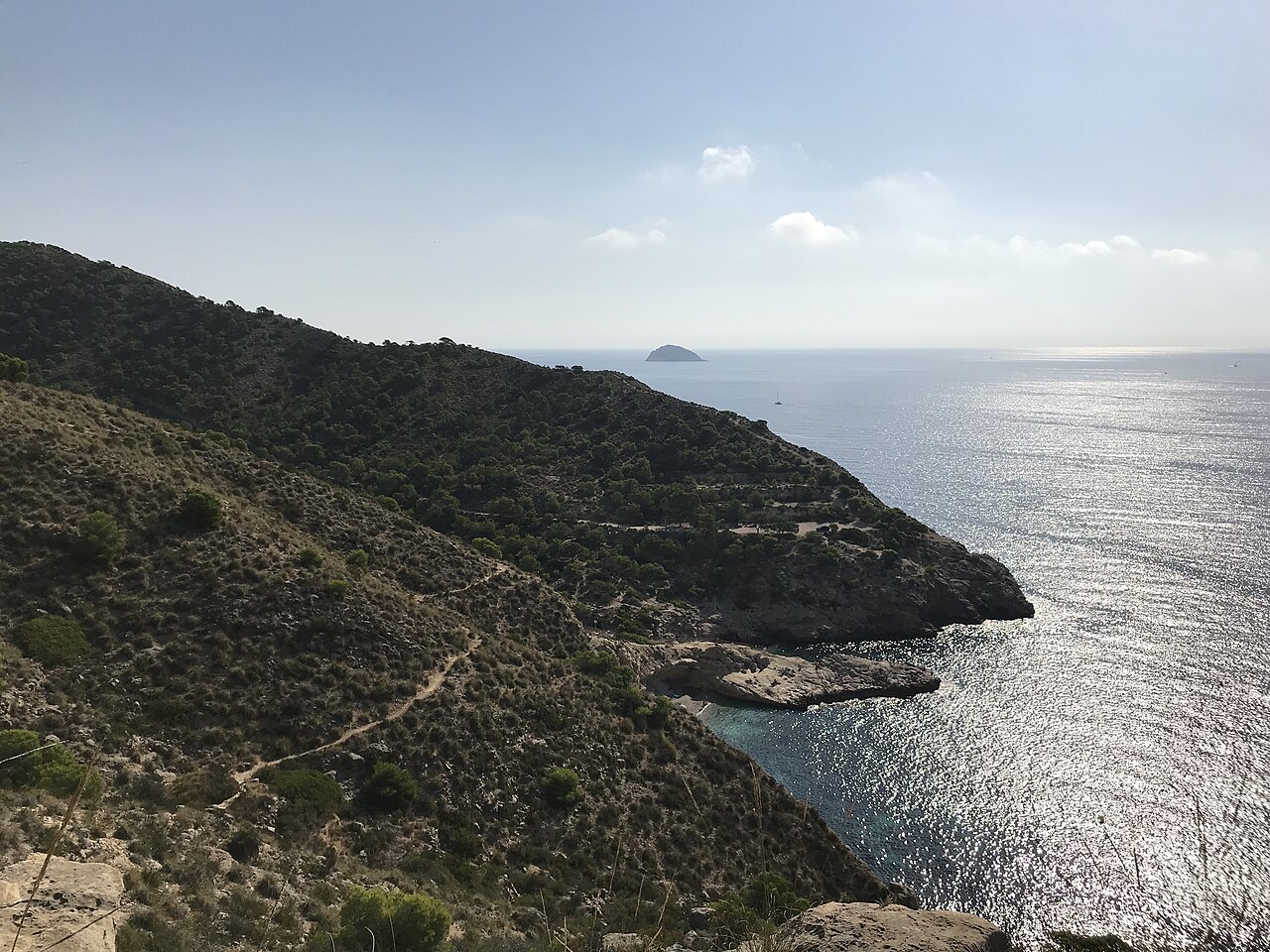
For Playa de San Juan and the other city beaches, the November-to-March window is the answer, not the summer. And Racó del Conill is in the same municipality as El Xarco but is not the designated beach; the two are several kilometres apart and only one of them is signed for dogs.
How to Check Before You Go
Designations move. Beaches get added, stretches get relocated after storms, and a town that allowed dogs one winter can write a new ordinance the next. Three sources are worth more than any list, including this one.
The first is the town hall’s own ordinance. Alicante publishes its animal ordinance in full as a PDF, and the council’s own summary of its approval is a readable way in. Dénia publishes its beach ordinance the same way, with a dedicated title on animals. Guardamar del Segura’s beach ordinance is published through the provincial bulletin. All are in Spanish; a machine translation is entirely adequate for the articles that matter.
The second is the Boletín Oficial de la Provincia de Alicante, where ordinances and their amendments are published and where the current version is authoritative if a council’s own website has gone stale.
The third is the sign at the access point, which is the version that will be quoted at you. Where a sign and a website disagree, the sign is what the officer standing next to it is working from.
One last piece of context for planning. Dog access is one of three separate systems that can turn you away at an Alicante beach, and they are run by different authorities on different rules: the animal ordinances covered here, the capacity barriers we set out in our guide to the beaches that limit visitor numbers in 2026, and the service standards behind the award we examined in our guide to Blue Flag beaches in Spain. Clearing one tells you nothing about the other two.
Written as general information, not as legal advice. Municipal ordinances are amended without notice and the position described here reflects the published rules at the time of writing for the 2026 season; a designation that exists this summer may not exist next. Fines, seasonal dates and the boundaries of signed stretches are set by each town hall individually and differ from one municipality to the next, sometimes between neighbouring ones. Confirm with the relevant ayuntamiento, and read the signage at the access point, before taking a dog onto any beach in the province.
Image Credits
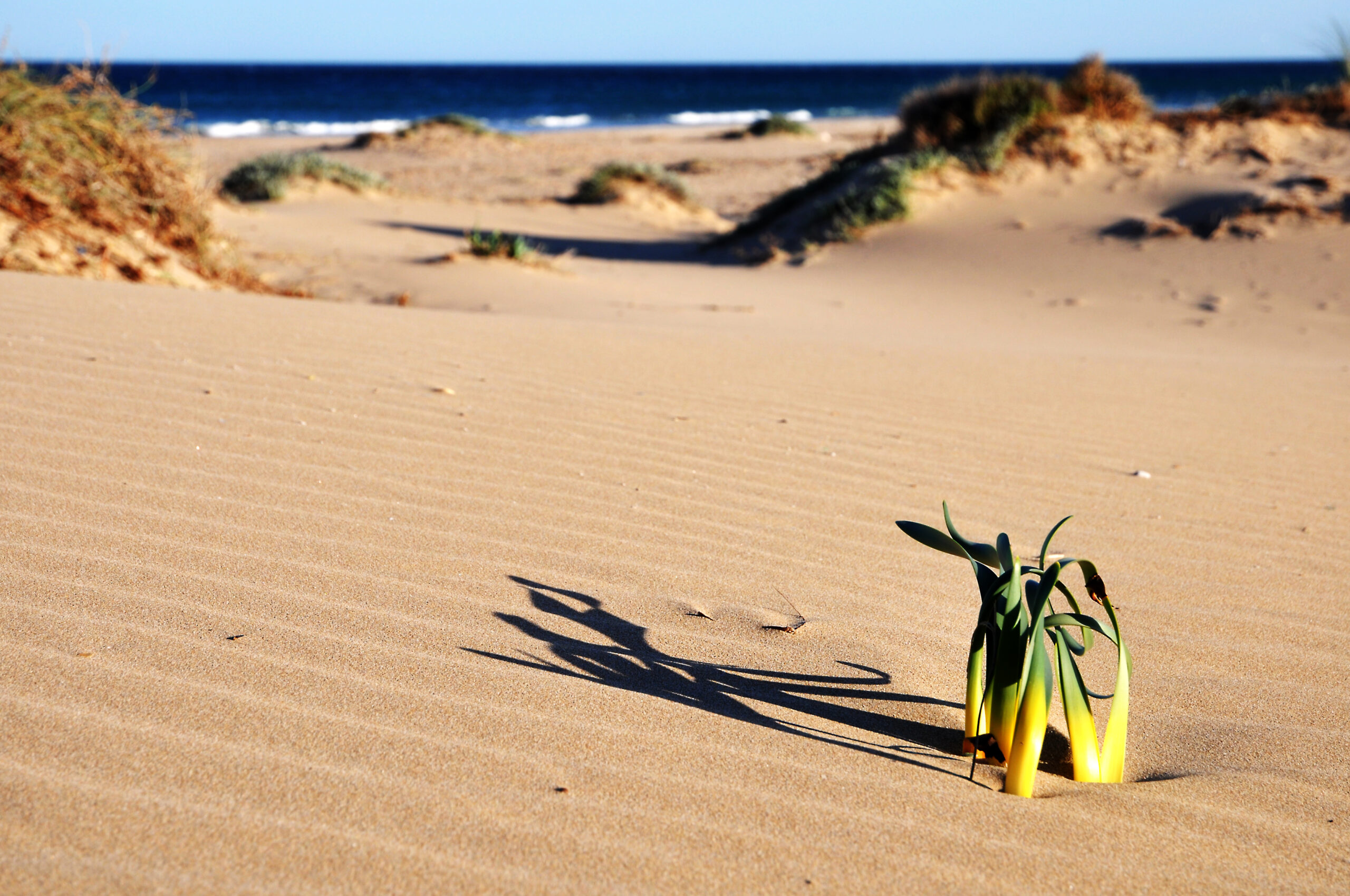
- Header and in-text image: Dunes at Playa del Carabassí, Elche, by Jappy20, released into the public domain, via Wikimedia Commons.
- In-article image: Coastline at Racó del Conill, La Villajoyosa, by Triplecaña, licensed under CC BY-SA 4.0, via Wikimedia Commons.
Leave a Reply