
Most Americans planning a beach trip to Spain spend hours choosing between Mallorca and the Costa del Sol and about four minutes on travel insurance for Spain, usually by ticking a box at checkout. That is backwards. The beach will be lovely wherever you go. What decides whether a bad day on holiday costs you $50 or $50,000 is the policy you bought, or did not buy, before you left.
This guide explains what Spain actually requires at the border, what your U.S. health plan does once you land, and which parts of a travel policy matter for a coastal trip: the summer storms, the strikes, the scuba trip and the phone that disappears off your towel. It also covers what European law already gives you for free, so you do not pay an insurer for protection you already have.

Do you need travel insurance to enter Spain?
Travel insurance for Spain is not a legal condition of entry if you are a U.S. citizen visiting as a tourist. Americans do not need a visa for stays of up to 90 days, and the U.S. State Department’s country page for Spain lists no insurance requirement for tourists. What it does list is worth knowing before you book:
- Passport validity: at least three months beyond the date you leave the Schengen Area, with the State Department recommending six months of remaining validity, plus a blank page for each entry and exit.
- Proof of funds and a return ticket: border officers in the Schengen Area can ask for both.
- Insurance advice: the State Department encourages travelers to buy medical evacuation insurance and to check whether their health plan covers care abroad.
EES and ETIAS: what has changed and what has not
The EU’s Entry/Exit System (EES), which registers non-EU travelers’ fingerprints and facial images at the border instead of stamping passports, has been fully operational at Schengen external borders since April 10, 2026. Expect a biometric check on your first arrival.
ETIAS, the online travel authorization that Americans will eventually need before flying to Spain, is a different matter. The EU’s official line for most of 2026 was that it would start in the last quarter of the year, with the exact date announced months in advance.
In July 2026, several outlets, citing the Financial Times, reported that the launch had slipped to 2027. Until the EU publishes a start date on its official ETIAS website, there is nothing to apply for. When it does start, the fee will be €20 and the authorization will be valid for up to three years. Either way, ETIAS is an entry permit, not insurance, and it will not pay a single hospital bill.
What your U.S. health plan does in Spain
The State Department is unusually direct about medical care in Spain. Good care is widely available, but you must pay for it, including at public facilities. Most hospitals and doctors abroad do not accept U.S. health insurance, private hospitals usually want payment, proof of insurance or proof of funds before admitting a patient, and Medicare and Medicaid do not cover care abroad. It also warns that unpaid medical bills can prevent you from traveling to Spain in the future.
What that means in practice depends on your plan:
- Employer or ACA marketplace plans: some reimburse emergency care abroad, often at out-of-network rates and only after you have paid. Few include evacuation. Call the number on your card and ask specifically about emergency care in Spain and transport home.
- Medicare: Original Medicare almost never pays outside the United States, and the Medigap foreign travel benefit is capped. Our separate guide to Medicare in Spain covers this in detail.
- Medicaid: no cover abroad.
To see what Spanish hospitals actually charge visitors, read our guide to hospital costs in Spain for tourists. Even a generous plan leaves two gaps that matter on a beach holiday: you will usually pay first and claim later, and the flight home after a serious injury is rarely included. Those two gaps are what travel insurance for Spain is really for.
Travel insurance for Spain: the parts of a policy that matter on a beach trip
“Travel insurance” is a bundle of separate covers, and the cheapest policies often drop the most important ones. The National Association of Insurance Commissioners (NAIC), the body of U.S. state insurance regulators, breaks the market into the types below. The right-hand column is our view of how much each matters for a typical Spanish coastal trip.
| Cover | What it pays for | Importance for a beach trip to Spain |
|---|---|---|
| Travel medical | Short-term care for illness or injury while traveling | Essential unless your own plan clearly covers Spain |
| Medical evacuation and repatriation | Transport to a capable hospital and later transport home | Essential; the cost can reach six figures |
| Trip cancellation and interruption | Prepaid, non-refundable costs if you cancel or cut the trip short for a covered reason | Important if you prepaid a villa, a resort or a package |
| Travel delay | Meals and hotels when a covered delay strands you | Useful; overlaps partly with EU flight rights |
| Baggage and personal effects | Lost, stolen or delayed luggage and belongings | Useful; check limits for phones and cameras |
| Accidental death and dismemberment | Lump sum after a serious accident | Low priority if you already hold life insurance |
If you remember one thing from this table: as travel insurance for Spain, a policy with $500 of baggage cover and no evacuation is a worse buy than one with no baggage cover and a six-figure evacuation limit.
Spain-specific risks your policy should handle
Storms, heat waves and flash floods
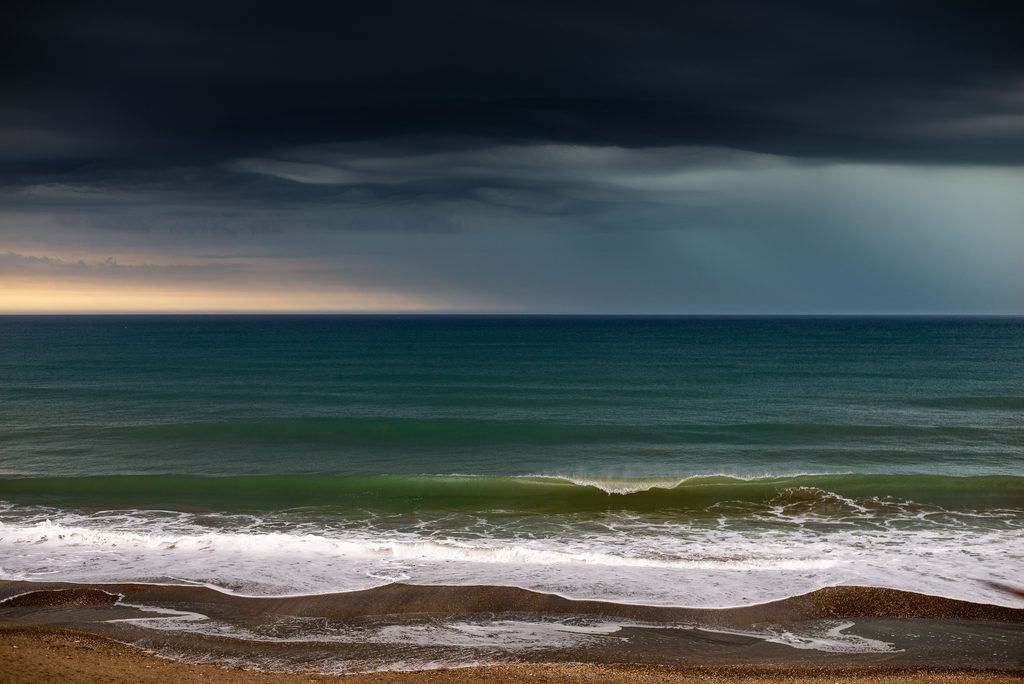
Spain’s Mediterranean coast gets reliable summer sun, but late summer and autumn bring the risk of sudden, violent rain episodes known locally as a DANA, and summer brings heat waves. Spain’s state weather agency, AEMET, issues color-coded weather warnings by area, and those warnings are the kind of documentation an insurer will want if a storm ruins part of your trip.
The catch is timing. The NAIC points out that once a storm has been named, a policy bought afterwards will likely not cover claims related to it. The same “foreseeable event” logic applies to any announced problem. Buy your policy when you book, not the week you fly. On the beach itself, wind matters more than most visitors expect; our guide to choosing a Spanish beach by the wind explains how to work around it day by day.
Strikes and flight disruption
Strikes by airline staff, airport workers or air traffic controllers in Spain or neighboring countries can disrupt summer flights. Before you pay an insurer for this, look at the EU flight rights described below, because they already cover a large part of the problem when the strike is by the airline’s own staff. Travel policies usually add value for the parts EU law does not reach: the prepaid hotel nights you lose, a missed cruise departure, or a connection on a different ticket. Read the strike clause: many policies cover a strike only if it had not been announced when you bought the policy.
Water sports and boat trips
Swimming and snorkeling are normally covered. Scuba diving below a certain depth, jet skis, parasailing and some boat excursions are where policies diverge, and the NAIC lists risky activities among the common exclusions. If you plan to dive in the Medes Islands or Cabo de Gata, check the activity list or buy a diving-specific add-on. And on any beach, the flag system is your first line of defense; see our explainer on beach warning flags in Spain for what each color means and when lifeguards are on duty.
Theft on the beach
A phone left on a towel while you swim is the most common “claim” of a Spanish beach holiday. Baggage and personal effects cover usually has a low per-item limit and may exclude items left unattended. Before buying extra cover, check your homeowners or renters policy: the NAIC notes that these often cover belongings lost or stolen while traveling. Whatever covers you, you will need a police report (denuncia) filed in Spain to make a claim.
What EU law already gives you for free
Under the EU’s air passenger rights rules, you can be owed fixed compensation, meals and a hotel when a flight is cancelled, overbooked or arrives very late. These rights depend on the route and the airline, not your nationality:
- Flights departing the EU (for example, Málaga to New York) are covered whether the airline is European or not.
- Flights arriving in the EU from outside (New York to Madrid) are covered only if operated by an EU airline.
- Flights within the EU (Madrid to Palma, Barcelona to Ibiza) are covered on any airline.
Compensation in the standard EU table ranges from €250 to €600 depending on flight distance, and it is generally due when you reach your final destination three or more hours late, unless the airline can show extraordinary circumstances such as adverse weather or air traffic management decisions. Strikes by the airline’s own staff usually do not count as extraordinary; strikes by outside workers may. Separately from compensation, the airline must provide meals and, if you are stuck overnight, a hotel and transport to it.
Two practical consequences. First, if you fly to Spain on a U.S. airline, your outbound flight is outside these rules but your return flight is inside them. Second, keep every receipt for meals and hotels and ask the airline in writing for the reason for the disruption; you will need that both for an EU claim and for any travel insurance claim.
Cancel For Any Reason: when it is worth paying for
Standard trip cancellation only pays for listed reasons, such as your illness, a family member’s hospitalization or severe weather. Cancel For Any Reason (CFAR) is an upgrade that pays regardless of why you cancel. According to the NAIC, it usually has to be bought within a set period after you book, it generally requires you to insure all prepaid, non-refundable trip costs, it only reimburses part of those costs, and you must cancel within a set period before departure.
It also costs noticeably more. The CDC Yellow Book estimates that comprehensive policies can cost up to 8% of the trip price, rising to up to 15% when CFAR is included. CFAR makes sense for an expensive, mostly non-refundable trip, such as a prepaid villa in Mallorca for the whole family, booked many months ahead. It rarely makes sense for a flexible trip of hotels you can cancel for free.
How much travel insurance for Spain costs
The NAIC’s rule of thumb is 5% to 10% of the total trip price, varying with season, destination, your age and what the policy includes. A few points move the price more than the destination does:
- Age: premiums climb steeply for older travelers, because medical cover is the expensive part.
- Trip cost insured: cancellation cover is priced on the prepaid amount you insure, so a villa booked upfront costs more to protect than pay-as-you-go hotels.
- Medical-only policies: if you only want medical and evacuation cover, without cancellation, the price is usually much lower than a comprehensive policy.
- Add-ons: CFAR, adventure sports and higher baggage limits all add cost.
The CDC lists independent comparison sites such as InsureMyTrip and Squaremouth as places to compare policies side by side. Use them to compare like with like: same medical limit, same evacuation limit, same trip cost insured.
Why your credit card is probably not enough
Premium travel cards often include trip delay, baggage and rental car benefits, and those can be genuinely useful. But the CDC states plainly that travelers should not treat credit card benefits as a substitute for travel health or medical evacuation insurance. Card benefits vary widely, often require the trip to be paid on the card, and nearly all require a formal claim with no guarantee of reimbursement. Check your card’s guide to benefits for three things: whether there is any emergency medical cover, whether there is evacuation cover, and the limits on each. If either is missing or low, you still need a policy.
Our checklist for choosing travel insurance for Spain
- Emergency medical limit high enough for a hospital admission with surgery; for older travelers, think in six figures.
- Evacuation and repatriation limit in six figures, with transport home to the U.S. when medically appropriate.
- Primary medical cover, so you do not have to claim from your U.S. plan first.
- Pre-existing conditions: check the exclusion and any waiver that requires you to buy within days of your first trip payment.
- 24-hour assistance that can pay hospitals directly, so you are not left to pay a large bill on your card.
- Weather and strike clauses: what counts as covered, and the “already announced” exclusion.
- Activity list that includes what you will actually do: diving, kayaking, boat trips.
- Per-item limits on phones, cameras and laptops if you rely on baggage cover.
What to buy, by type of trip
| Your trip | What we would prioritize |
|---|---|
| One week, couple, flexible hotels, good employer health plan | Medical-only policy with strong evacuation cover; skip cancellation |
| Family, prepaid villa or package booked months ahead | Comprehensive policy insuring the full prepaid cost; consider CFAR |
| Retirees on Medicare, two to twelve weeks | Primary travel medical with high evacuation limit covering every day of the stay |
| Divers and water-sports fans | Policy or add-on that explicitly covers diving at your planned depth |
| Mediterranean cruise with Spanish ports | Comprehensive policy with medical, evacuation and missed-departure cover |

If something goes wrong: how to protect your claim
- Emergencies first. Call 112, Spain’s emergency number; the State Department notes you can ask for an English-speaking operator.
- Call your insurer’s assistance line early, before admission if possible, so they can guarantee payment and approve treatment.
- Get paperwork in Spain: an itemized invoice and discharge report from any clinic, a police report for theft, and a written reason from the airline for any disruption.
- Save evidence of weather events, such as screenshots of the AEMET warning for your area on that day.
- Keep every receipt for meals, taxis, hotels and replacement items, and file claims promptly within the policy’s deadline.
- Know your consular contacts. The U.S. Embassy in Madrid and the Consulate General in Barcelona both have after-hours emergency lines listed on the State Department’s Spain page.
Frequently asked questions
Is travel insurance mandatory for Spain for U.S. citizens?
No, not for tourists visiting without a visa for up to 90 days. It is strongly advisable, because you must pay for medical care in Spain, including at public facilities, and most providers do not accept U.S. insurance.
Do I need ETIAS to visit Spain right now?
Not until the EU announces a start date on its official ETIAS website. After repeated delays, reports in July 2026 pointed to a 2027 launch. When it starts, it will cost €20 and last up to three years.
Does travel insurance cover a storm that ruins my beach holiday?
Often, if severe weather is a listed reason and you bought the policy before the storm was named or forecast. Bad weather alone, such as a few cloudy days, is not covered.
Will I get compensation if my flight from Spain is cancelled?
Possibly, under EU air passenger rights, which apply to all flights departing the EU. Compensation ranges from €250 to €600 in the standard table, unless the airline proves extraordinary circumstances. The airline must also provide meals and, if needed, a hotel.
How much should I pay for travel insurance for Spain?
Typically 5% to 10% of the trip cost for a comprehensive policy, according to the NAIC, and more if you add Cancel For Any Reason. A medical-and-evacuation-only policy is usually cheaper.
Sources
- U.S. Department of State — Spain International Travel Information
- NAIC — Should You Get Travel Insurance? What You Should Know About Protecting Your Trips
- CDC Yellow Book — Travel Insurance, Travel Health Insurance, and Medical Evacuation Insurance
- Your Europe (European Union) — Air passenger rights
- Georgetown University Office of Global Services — Update on EES and ETIAS
- AEMET (Spanish State Meteorological Agency) — Weather warnings
Disclaimer: This article is general information for travelers and is not insurance or legal advice. Policy terms, prices and entry rules change and vary by insurer and by state. Read any policy in full before buying, confirm entry requirements on official government websites before you travel, and contact your own health plan about cover abroad. Information checked in October 2026.
Leave a Reply