Beach warning flags in Spain are the most widely misread piece of signage on the coast, and the misreading is not really about the colours. Almost everyone works out fairly quickly that green is fine, yellow is careful and red is no. What far fewer people register is what the flag is describing, and what it is silent about.
A flag describes the water. It says nothing about whether anyone is watching you swim in it. And the Spanish drowning data is unambiguous about which of those two variables actually kills people.
What This Guide Covers
- The three colours, and what they actually mean
- The other beach warning flags, and who invents them
- What the drowning figures say
- The empty flagpole
- Lifeguard seasons are shorter than summer
- Swimming under a red flag
- What this means for the coves we write about
The Three Colours, and What They Actually Mean
The triple code is recognised across the Mediterranean and Atlantic coasts, not only in Spain.
Green. Bathing is permitted. This is the one most often over-read. Green does not mean safe; it means that conditions at the time of hoisting fell within the range the service considers normal. Currents, cold water, sudden weather and your own capability are all outside what the flag is measuring.
Yellow. Bathing permitted with caution. There is a hazard: moderate swell, currents, jellyfish, floating debris, submerged rocks, or wind. The standing advice is to stay near the shore, keep your feet within reach of the bottom, avoid going out beyond your depth, and take particular care with children and anyone with reduced mobility.
Red. Bathing prohibited. This is not a strong yellow. It is raised for heavy swell, dangerous currents, contamination, hazardous marine life or other conditions that make entering the water a high-risk activity.
Black exists too, and is rare enough that most visitors will never see one. It signals that the beach as a whole is closed, sand included, because of a general problem with the water or the shore rather than with the sea state alone.
The Other Beach Warning Flags, and Who Invents Them
Here is the structural fact that explains most of the confusion. According to ADEAC, the organisation that runs the Blue Flag programme in Spain, it is each town hall that creates the supplementary flags used on its own beaches, alongside the three basic colours.
That is why a symbol you learned in one town may be absent, or mean something slightly different, twenty kilometres along the coast. The three colours are close to universal. Everything else on the mast is local.
The ones you are most likely to encounter:
- Jellyfish flag. Usually flown alongside a yellow or red flag depending on how many are in the water, rather than on its own.
- Yellow with a black dot. Not a variant of the yellow warning. It prohibits boats and surfboards in that stretch of water. Easily confused with the ordinary yellow flag, which is precisely the problem with it.
- Black and white chequered. A surf zone. Bathing there carries a collision risk rather than a sea-state one.
- White and blue. A diving area, warning boats to navigate with care rather than warning swimmers.
Several autonomous communities add their own further symbols. If you see something on a mast that is not in this list, the beach’s own information board is the place to resolve it, not a general guide — including this one.
What the Drowning Figures Say
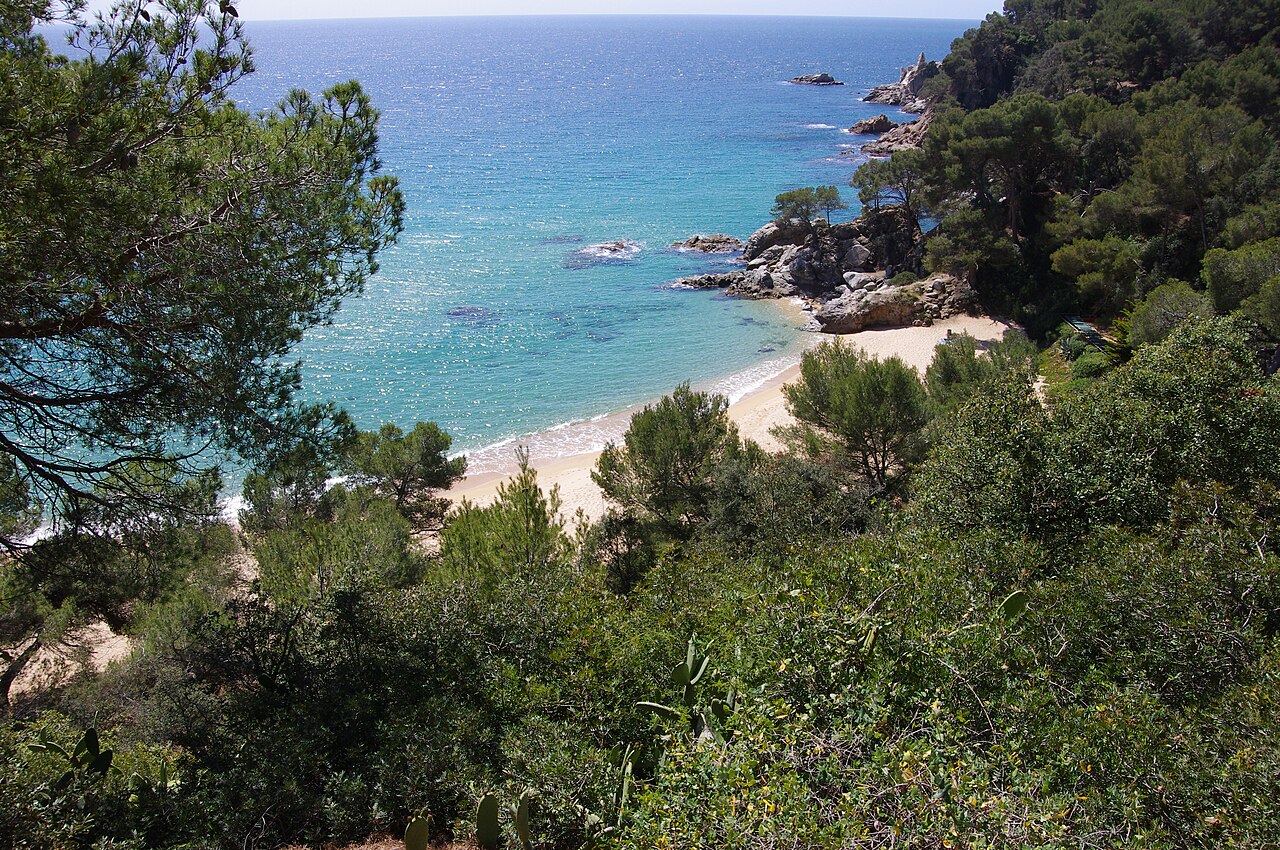
The Real Federación Española de Salvamento y Socorrismo publishes a monthly and annual Informe Nacional de Ahogamientos. It is the authoritative record, it is free to read, and it is grim.
2025 closed with 472 deaths from unintentional drowning in Spanish waters. Beaches were the most frequent setting, with 241 — more than half the annual total. Rivers accounted for 88, swimming pools 49, and other water bodies such as reservoirs, canals and ports 94.
The supervision breakdown is the number that should change how you plan a day. Of those 472 deaths, 220 occurred in places with no lifeguard service at all, and a further 200 in places where a service existed but was not active at that moment. Fifty-two occurred where a service was operating. That is 420 out of 472 — around 89 per cent — with nobody watching.
The trend is not improving. The series runs 338 in 2020, 360 in 2021, 394 in 2022, 422 in 2023, 471 in 2024 and 472 in 2025. And 2026 has been worse again: 125 deaths by the end of May, then 92 in June alone — the worst June since the report began in 2015, against a previous June high of 73 in 2025. July added 91 more, the second-worst month of the year, which takes the total to 308 by 31 July. That is the federation’s own arithmetic and it is worth setting out: 125 to the end of May, plus 92, plus 91.
One nuance worth stating rather than smoothing over. The June 2026 figures are categorised slightly differently: of the 92 deaths that month, 42 occurred where a lifeguard service was present at the location, 20 where there was no active surveillance at the time, and 30 in spaces where such a service would not apply. That does not overturn the annual pattern, but it is a reminder that a lifeguard reduces risk rather than removing it — a point the federation itself makes repeatedly, warning against the false sense of security that a manned tower can create.
Two further details from the 2026 reports that are worth carrying around. More than 55 per cent of fatal drownings happen between ten in the morning and six in the evening — the hours people assume are the safe ones. And the victims are overwhelmingly male: of the 308 deaths to the end of July, 240 were men and 68 women, close to eight in ten. Beaches were again the commonest setting in July, accounting for 45 of the 91.
The Empty Flagpole
Put the flag system and the drowning figures side by side and a gap opens up that no colour code covers.
A green flag on a supervised urban beach means a service assessed the conditions this morning and will reassess them if the sea changes. A green flag left up on a beach where the season ended last week means nothing at all. And on the majority of the coves worth walking to, there is no flagpole, because there is no service to raise anything on it.
The absence of a red flag is not information. It is the absence of information. This is the single most useful sentence in this article, and it applies to most of the Spanish coastline outside the resort beaches.
Lifeguard Seasons Are Shorter Than Summer
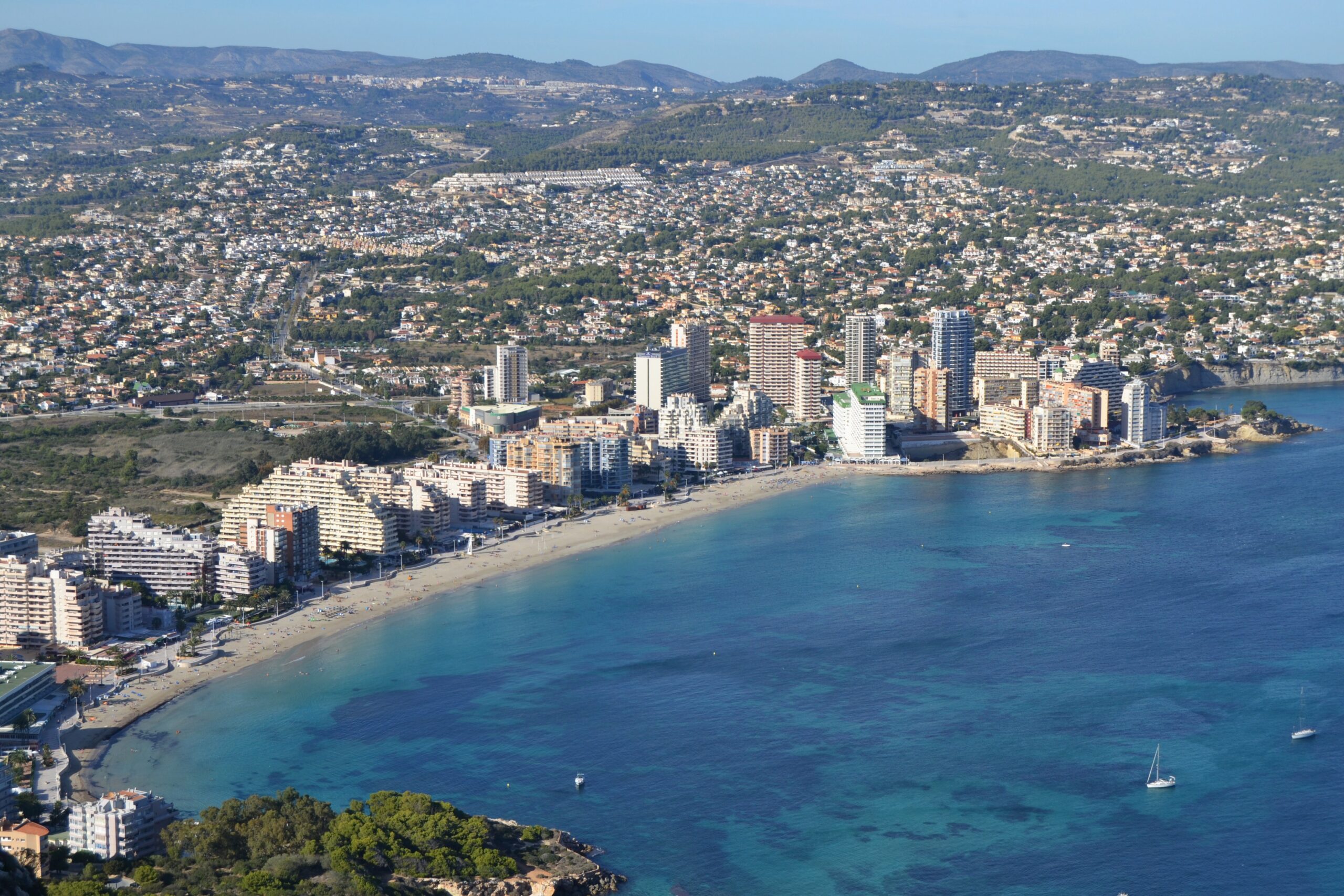
Lifeguard cover is arranged municipally, which means there is no national start date and no national finish date. What is consistent is that the season is shorter than the period during which people actually swim.
Typical patterns on this coast: a full daily service through July and August, a reduced or weekend-only service in June and September, and nothing at all outside that. Smaller coves frequently get weekend cover only, even in high season. Hours matter as much as dates — a service that finishes at seven in the evening leaves the last two hours of a long August day unwatched, and those are pleasant hours to swim in.
The federation’s own recommendations, published alongside the drowning figures, include extending both the season and the daily hours of surveillance, which tells you how they read the same numbers.
The practical consequence: a warm Saturday in early October on a beach that was fully staffed six weeks earlier is, in supervision terms, a completely different beach. The water may be at its warmest of the year. Nobody is watching it.
Swimming Under a Red Flag
Ignoring a red flag can be a fineable offence, and in a number of municipalities it is classed as a serious infraction with penalties to match. The amounts are set in each town’s beach ordinance, so there is no single national figure to quote, and anyone wanting a number for a specific beach needs that town’s ordinance rather than a general article.
The fine is not really the point. A red flag is raised because a service that watches that water every day has judged it dangerous, and the rescue that follows a bad decision puts the lifeguard in the same water. It is worth remembering that a meaningful share of drowning victims are people who went in to help somebody else.
What This Means for the Coves We Write About
We should be straightforward about this, because it applies to most of what is on this site.
The great majority of the beaches in our guides have no lifeguard, or weekend cover only in the peak weeks, and several have no flagpole at all. That is inseparable from what makes them worth visiting — the same absence of infrastructure that keeps them quiet is the absence of anyone watching. It is also why almost none of them carries a Blue Flag, since supervision is one of the award’s requirements, as we set out in our guide to Blue Flag beaches in Spain.
Three specific cases from our own coverage, because generalities do not keep anybody out of trouble.
Cala Treumal has a steep shore that produces shorebreak and pull-back, which is a hazard of the beach’s shape rather than of the day’s weather, and therefore one no flag is designed to communicate.
Playa de los Muertos is named for what its convergent currents used to deposit on the sand. It has a long record of drownings, it is reached on foot down a steep descent, and it is not a beach to treat casually because the water looks calm from the clifftop.
The five regulated beaches west of San José in Cabo de Gata have no lifeguard, no drinking water and no shade, as we set out in our guide to getting into Cabo de Gata in 2026. The barrier at the entrance regulates cars. It does not supervise anybody.
None of this is an argument against wild coves. It is an argument for knowing which kind of beach you are standing on, and adjusting accordingly: swimming closer in, not swimming alone, watching children continuously rather than periodically, and treating an empty flagpole as what it is.
Written as general information and not as safety instruction or emergency guidance. Flag meanings, supplementary symbols, lifeguard seasons, daily hours and penalties are set locally and vary between neighbouring municipalities; the information board at the beach and the instructions of the on-duty service always take precedence over anything written here. Sea conditions change within minutes and a flag reflects a judgement made at the time it was raised. In an emergency anywhere in Spain, call 112. If you are unsure whether conditions suit your swimming ability, the safe answer is to stay out of the water.
Sources
- The state-level root of the system is the Orden de 31 de julio de 1972, por la que se dictan normas e instrucciones para la seguridad humana en los lugares de baño, published in the Boletín Oficial del Estado. It remains the reference text, and the coastal autonomous communities and town halls have built their own rules on top of it in the decades since.
- This is why the three basic colours are consistent the length of the Spanish coast while everything else on the mast is not. Green, yellow and red descend from the state order; supplementary flags — jellyfish, water quality, no-swimming zones, colour-blind pictogram versions — are added by regional decree or municipal ordinance, and differ from one town hall to the next. There is no single national catalogue of them.
- The decision to raise or lower a flag rests with the lifeguard service operating under municipal authority, not with a regional or national body. That is also why the flag season is a municipal contract rather than a fixed date: outside it, the mast is empty and nobody is watching, which is the point this guide is making.
- Confirm the flag rules that apply to a specific beach with the town hall that runs it. A red flag is legally enforceable and swimming against one can carry a fine; the amount is set by municipal ordinance and varies widely.
- The drowning figures. All of them come from the Informe Nacional de Ahogamientos, compiled by the Real Federación Española de Salvamento y Socorrismo. The 2025 totals — 472 deaths, of which 220 occurred where no lifeguard service existed, 200 where a service existed but was not active at that moment, and 52 where one was operating — are published in the federation’s report on the 2025 figures, which also gives the year-by-year series and confirms that beaches accounted for 241 of the deaths, more than half the annual total. The full reports for every year since 2015 are published in the federation’s INA archive.
- The 2026 figures come from the federation’s monthly updates, including its report that July 2026 brought the annual total to 308, which gives 91 deaths in July, 45 of them on beaches, and a split of 240 men to 68 women across the year to date; and its report that June 2026, with 92 deaths, was the worst June since the Informe Nacional de Ahogamientos began in 2015. Two figures in this guide were wrong until August 2026 and are recorded here rather than quietly changed: we gave the end-of-July total as 274, and we described June as the worst month in the report’s history when the federation describes it as the worst June. Monthly figures are provisional and are revised upwards as cases are confirmed, so early press reports of a given month tend to run below the federation’s later count.
Image Credits
- Header and in-text image: Cala Treumal, Blanes, by Crispica, licensed under CC BY-SA 3.0, via Wikimedia Commons.
- In-article image: Playa de la Fossa from the Peñón de Ifach, Calpe, by Joanbanjo, licensed under CC BY-SA 3.0, via Wikimedia Commons.
Leave a Reply