
Buying property in Spain as an American is easier than most people expect and more expensive than most listings suggest. There is no ban on foreign buyers, no need to live in Spain, and no minimum investment. But the asking price on that sea-view apartment in Jávea, Marbella or Tossa de Mar is not what you will pay. Taxes and fees add a fixed and fairly predictable percentage on top, and that percentage depends on which stretch of coast you choose.
This guide walks through the real cost of buying property in Spain on the coast, region by region, with a worked example for the three areas this site covers most: Alicante, Andalucía and the Costa Brava. It also explains the paperwork, the beach-specific checks most buyers skip, and the U.S. forms that come with owning a Spanish home.

Can Americans buy property in Spain?
Yes, freely. Spain does not restrict property purchases by U.S. citizens, and you do not need residency or a visa to buy. What you do need is a Spanish tax identification number for foreigners, the NIE, which every party to a property deed must have.
Two points often confuse American buyers:
- Owning is not living. The Spanish consulate in New York is explicit that an NIE does not give you the right to live in Spain. As a property owner without a residence visa, you are still limited to 90 days in any 180-day period in the Schengen Area, like any other U.S. tourist.
- The Golden Visa is gone. Spain used to offer residence to non-EU buyers who invested €500,000 or more in property. Organic Law 1/2025 abolished that route, effective April 3, 2025. Buying a home no longer leads to residency on its own.
How to get an NIE from the United States
You can apply at the Spanish consulate that covers your state or in person in Spain. Using the New York consulate as an example, you book an appointment, bring form EX-15 explaining the economic reason for the application (buying property qualifies), your passport and a copy, and pay a small fee on form 790; at the time of writing it was $12 by USPS money order. The NIE is issued by Spain’s immigration authority, normally in about five weeks, and sent by email. A representative with a power of attorney can apply on your behalf, which is how many buyers handle it if they cannot travel.
The proposed 100% tax on non-EU buyers: where it stands
In January 2025 the Spanish prime minister announced a plan to tax home purchases by non-EU non-residents at up to 100% of the property’s value, effectively doubling the cost. It made headlines in the U.S. and it still worries buyers.
Here is the current position: according to Reuters reporting in March 2026, the bill had stalled in Congress for lack of support from the smaller parties the government depends on, and it had not been debated. It is not law. If it ever passes in its proposed form, lawyers expect it to be challenged as discriminatory, and it would not apply to buyers who are Spanish residents. Check the status again before you sign anything, because a change in the law would change every number in this guide.
Buying property in Spain: the costs on top of the price
The single biggest extra cost is purchase tax, and which tax applies depends on whether the property is a resale or a new build sold by the developer.
Resale homes: transfer tax (ITP), set by each region
When you buy from a private seller, you pay the Impuesto de Transmisiones Patrimoniales (ITP). Spain’s regions set their own rates, so the same apartment costs a different amount in tax depending on the coast:
| Region (beach areas) | Standard ITP rate on a resale home | Notes |
|---|---|---|
| Andalucía (Costa del Sol, Almería, Cádiz) | 7% | Single flat rate |
| Comunitat Valenciana (Costa Blanca, Alicante, Valencia) | 9% | Cut from 10% to 9% from June 1, 2026; a higher rate applies to properties above €1 million |
| Catalonia (Costa Brava, Costa Daurada) | 10% to 13% | Progressive since June 26, 2025: 10% up to €600,000, 11% to €900,000, 12% to €1.5 million, 13% above |
On the Costa Brava, the Catalan scale is applied by bracket, so a €800,000 villa pays 10% on the first €600,000 and 11% on the remaining €200,000.
New builds: VAT plus stamp duty
A new home bought from the developer pays 10% VAT (IVA) instead of ITP, plus stamp duty on the deed, the Actos Jurídicos Documentados (AJD). The general AJD rate is 1.2% in Andalucía, 1.4% in the Comunitat Valenciana since June 1, 2026, and 1.5% in Catalonia. New builds therefore usually cost slightly more in tax than resales, but they come with developer warranties and no history of unpaid community fees.
The tax base may be higher than your price
Since 2022, Spain’s property cadastre, the Catastro, publishes a “reference value” for most properties. For transfer tax, the taxable base is generally the higher of the price you pay and that reference value. If you negotiate a bargain below the reference value, you may still pay tax as if you had paid the reference value. You can check it on the Catastro’s official website before you make an offer.
Notary, Land Registry and lawyer
Every purchase is signed before a Spanish notary and then registered at the Land Registry (Registro de la Propiedad). Both charge fees set by official tariffs that rise with the price. You will also want an independent Spanish property lawyer; their fee is negotiable and many charge around 1% of the price plus VAT. A gestoría (administrative agency) may handle tax filings and registration for a small fixed fee. Ask for written quotes for all of these before you sign the deposit contract.
Worked example: a €300,000 resale apartment
To show how much the region matters, here is the same €300,000 resale apartment bought in each area. Taxes use the general rates above. For the other costs we have assumed a lawyer charging 1% plus 21% VAT (€3,630) and €2,000 for notary, Land Registry and gestoría together; your quotes will differ, so treat those two lines as placeholders.
| Cost | Andalucía | Comunitat Valenciana | Catalonia |
|---|---|---|---|
| Purchase price | €300,000 | €300,000 | €300,000 |
| Transfer tax (ITP) | €21,000 (7%) | €27,000 (9%) | €30,000 (10%) |
| Lawyer (assumed) | €3,630 | €3,630 | €3,630 |
| Notary, registry, gestoría (assumed) | €2,000 | €2,000 | €2,000 |
| Total cost | €326,630 | €332,630 | €335,630 |
| Extra over the price | 8.9% | 10.9% | 11.9% |
The rule of thumb that falls out of this: when buying property in Spain on the coast as a non-resident, budget roughly 9% to 12% on top of the price for a resale, before any mortgage or currency costs. On a €300,000 apartment, choosing the Costa del Sol over the Costa Brava saves about €9,000 in tax alone.
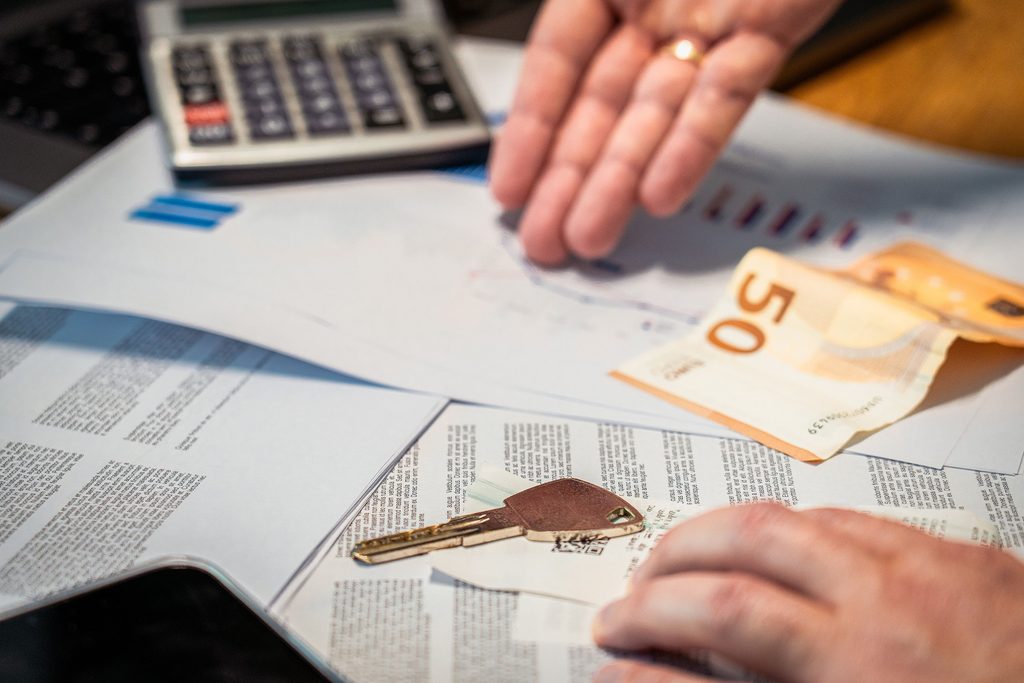
Step by step: how buying property in Spain works
- Get your NIE. Start early; it can take over a month from the U.S.
- Open a Spanish bank account. You will need it to pay taxes, community fees and utilities by direct debit.
- Hire an independent lawyer, not one recommended by the seller’s agent, and give them a power of attorney if you will not be in Spain for every step.
- Due diligence. Your lawyer checks the Land Registry extract (nota simple) for the owner and any mortgages or liens, the latest property tax (IBI) receipt, a certificate that community fees are paid up, the building’s planning status and, on the coast, the Ley de Costas position (see below).
- Reservation and deposit contract. Buyers usually sign an arras contract and pay a deposit, commonly around 10%. Under the most common form, set out in Article 1454 of the Spanish Civil Code, the buyer loses the deposit if they walk away, and the seller must return double if they do.
- Completion before a notary. Buyer and seller (or their representatives) sign the public deed (escritura), the balance is paid by bank transfer or banker’s draft, and you get the keys.
- Pay the tax and register. The ITP or AJD return must be filed and paid within the region’s deadline, and the deed is then registered at the Land Registry in your name.
Beach-specific checks most buyers skip
The Ley de Costas protection zone
Spain’s Coastal Law creates a protection easement that runs 100 meters inland from the edge of the public shoreline, reduced to 20 meters in areas that were already urban in 1988. Within that strip, new homes are prohibited and works on existing buildings are restricted. Older beachfront buildings inside it can be perfectly legal to buy, but you may not be allowed to extend or rebuild them as freely as a normal property. Ask your lawyer to confirm where the building sits relative to the official boundary. Our guide to the Ley de Costas and why every Spanish beach is public explains the law in more detail.
Tourist rental rules
If you plan to rent the apartment to holidaymakers when you are not there, check this before you buy, not after. Since April 2025, the owners’ association of a building can require approval by three-fifths of owners before a flat is used as a new tourist rental, and many coastal towns and regions limit or license short-term lets. A flat without the right to rent can be worth less to you than one that has it.
Seasonality and the beach itself
Many resort towns are lively from June to September and very quiet in winter, with restaurants and shops closed. Visit in the low season before committing. And look hard at the beach, not just the apartment: water quality, crowding, wind exposure and access all affect both your enjoyment and future resale. Our rankings, such as the best beaches on the Costa Brava, and our explainer on what a Blue Flag really measures are a good starting point.
U.S. paperwork when buying property in Spain
Owning a Spanish home does not, by itself, trigger the main U.S. foreign-asset reports. According to the IRS comparison of Form 8938 and the FBAR, foreign real estate held directly in your own name is not reportable on either form. What is reportable is the Spanish bank account you open to run the property:
- FBAR: if the combined balance of your foreign accounts exceeds $10,000 at any time in the year, you must file an FBAR electronically with FinCEN. It is filed separately from your tax return.
- Form 8938: higher thresholds apply, and the account may also need to be reported there.
- Holding through a company: owning the property through a Spanish or U.S. company changes the picture entirely and needs specialist advice.
Rental income from the property and any gain when you sell also have Spanish and U.S. tax consequences. A cross-border tax adviser who works with both systems is worth paying for before you buy, not after.
Paying for it from the United States
Many American buyers pay in cash or with a mix of savings and a U.S. home equity loan, because Spanish banks lend to non-residents on stricter terms than to residents. Whichever route you take, the money has to arrive in euros, and the exchange rate on a six-figure transfer matters as much as a percentage point of tax.
- Compare the full cost of the transfer, not just the wire fee. Banks often add a margin to the exchange rate, and on €300,000 a difference of one percent in the rate is about €3,000.
- Fix the rate if the timing allows. Months can pass between the deposit and completion, and the dollar can move a lot in that time. Some currency providers let you lock a rate for a future date.
- Keep a clear paper trail. The Spanish notary records how the price is paid, so every payment should go by traceable bank transfer or banker’s draft from an account in your name, with statements you can show.
- Allow time for compliance checks. Large international transfers can be held for anti-money-laundering checks on either side. Send the funds well before the signing date.
If you are thinking about a Spanish mortgage, the key questions are how much of the price a bank will lend to a non-resident, at what rate, and what insurance it will require with the loan. Ask several banks for a binding offer before you sign the deposit contract, so a refused loan does not cost you your deposit.
Running costs after you buy
- IBI: the annual municipal property tax, set by each town.
- Community fees: for apartments and gated developments, covering pools, gardens, lifts and building insurance of common areas. Ask for the last year’s accounts and any planned special charges.
- Non-resident income tax: Spain taxes non-resident owners every year even if the property is not rented, on a notional income, and on actual income if it is rented. Our guide to Spanish property taxes explains how much and when.
- Home insurance: a Spanish home insurance policy is required if you take a Spanish mortgage and sensible regardless, especially for a home left empty for months.
- Utilities and upkeep: sea air is hard on metal, air-conditioning units and paintwork, so budget for more maintenance than inland.

Frequently asked questions
Can a U.S. citizen buy a house in Spain without living there?
Yes. You only need an NIE. Owning property does not give you residency, so you remain limited to 90 days in any 180 in the Schengen Area unless you obtain a residence visa.
How much are the taxes when buying property in Spain?
For a resale home, transfer tax is 7% in Andalucía, 9% in the Comunitat Valenciana and 10% to 13% in Catalonia. New builds pay 10% VAT plus 1.2% to 1.5% stamp duty in those regions. With fees, budget roughly 9% to 12% over the price.
Is the 100% tax for American buyers in force?
No. It was proposed in January 2025 and, according to Reuters reporting in March 2026, had stalled in Congress without being debated. Check its status before you sign.
Can I still get a Golden Visa by buying property in Spain?
No. Organic Law 1/2025 ended residence by property investment from April 3, 2025.
Do I have to report my Spanish home to the IRS?
Real estate held directly in your name is not reportable on the FBAR or Form 8938, according to the IRS. Your Spanish bank account usually is, once the balance passes the thresholds, and rental income and gains are taxable in the U.S.
Sources
- Consulate General of Spain in New York — NIE (Foreigner Identity Number)
- KPMG — Spain: Golden Visa abolished by Organic Law 1/2025
- Reuters via MarketScreener — The 100% tax on non-EU buyers stalls in Congress (March 2026)
- Garrigues — Comunitat Valenciana tax measures (ITP 9% and AJD 1.4% from June 2026)
- Universitat de Barcelona — Catalonia’s new ITP scale (Decree-law 5/2025)
- Guía Fiscal — Andalucía ITP and AJD rates (Law 5/2021)
- BOE — Ley 22/1988 de Costas (Coastal Law)
- Sede Electrónica del Catastro — Reference values
- IRS — Comparison of Form 8938 and FBAR requirements
Disclaimer: This article is general information and is not legal, tax or financial advice. Tax rates, fees and laws change, and regional reduced rates and individual circumstances can alter the figures. Use an independent Spanish lawyer and a cross-border tax adviser before buying property in Spain. Information checked in October 2026.
Leave a Reply