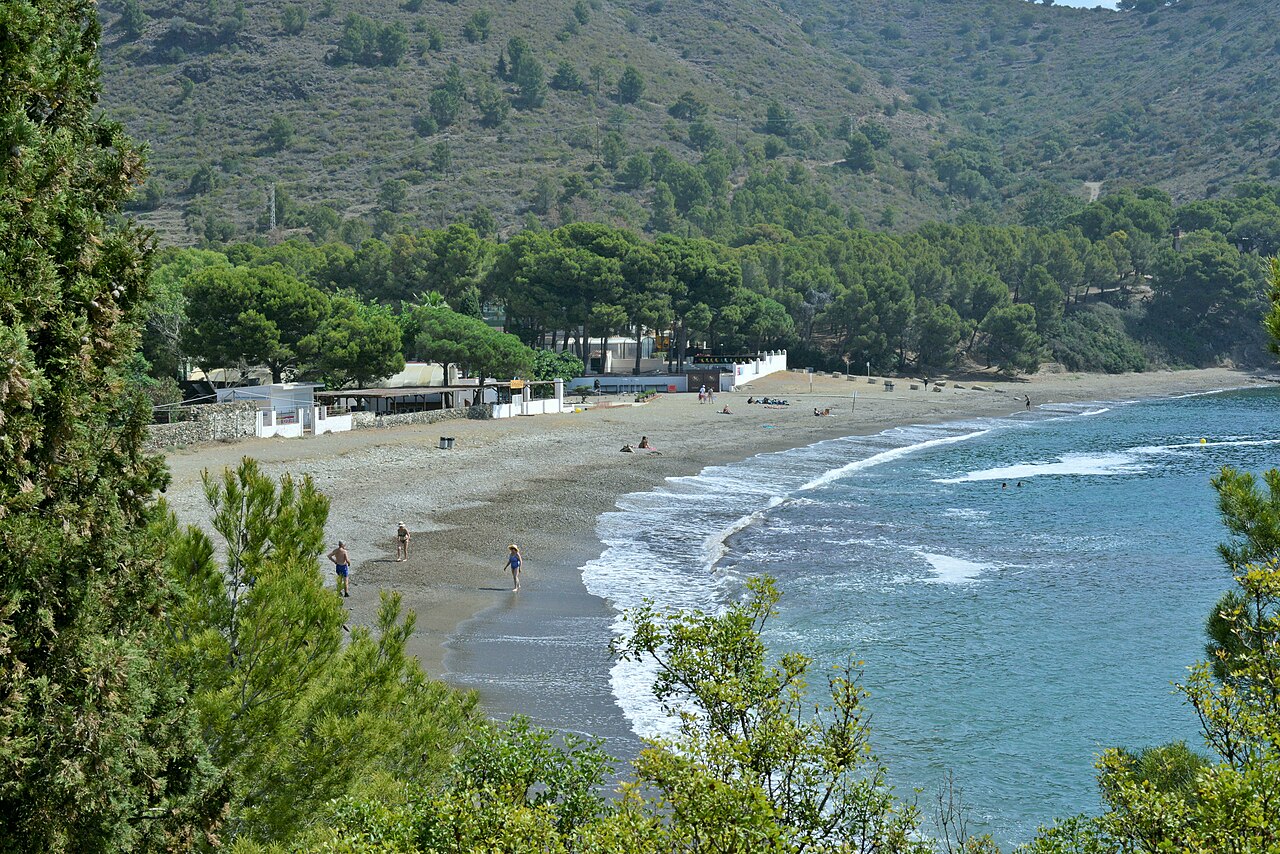
On 30 July 2011 a restaurant at the back of this cove served its last meal and closed. It had three Michelin stars, it had been called the best restaurant in the world more times than anyone could keep track of, and it turned away far more people than it ever fed. Twelve years later the same building reopened — not as a restaurant, and never again as one, but as a museum. That single fact now governs almost everything practical about visiting Cala Montjoi, including whether you are allowed to drive here at all in August.
The Restaurant That Became a Museum
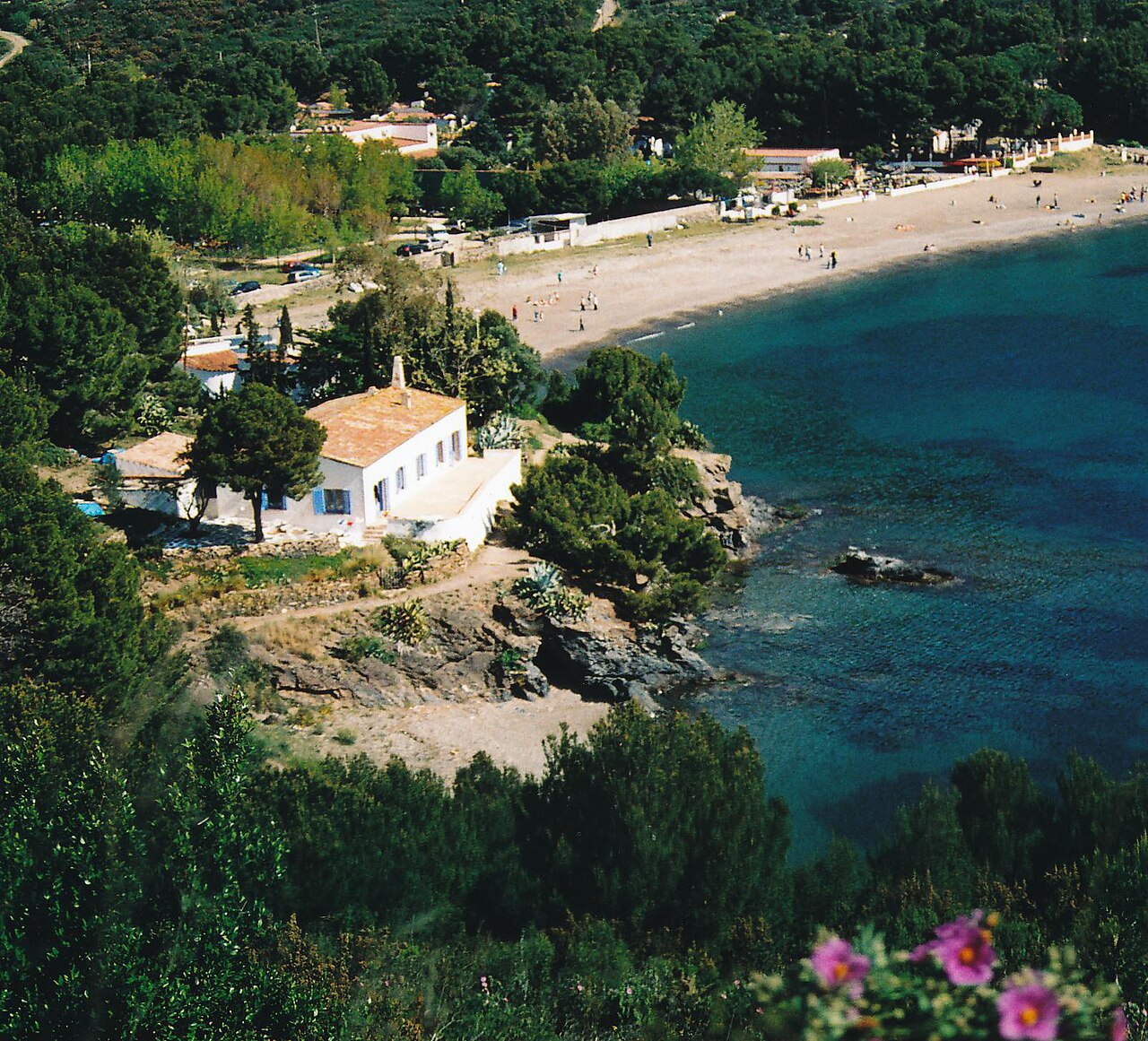
elBulli1846 opened on 15 June 2023, on the exact site of the old restaurant, and it is now the headquarters of the elBullifoundation. The number in the name does double duty: 1,846 is the count of recipes the restaurant created, and 1846 is the year Auguste Escoffier was born.
It is not a shrine and it is not a food museum in the ordinary sense. Roughly four thousand square metres of indoor and outdoor installations set out the history of elBulli, the creative method behind it, and a long argument about knowledge and innovation that keeps asking you awkward questions — is peeling an apple cooking? The old kitchen and a reconstruction of the dining room are part of the route.
Practical details, because they matter here more than usual. The museum runs a season rather than a year: recent calendars have run from around the start of May to mid-October, Tuesday to Saturday, with exceptions — check the current calendar before you plan anything around it. Buy online: tickets bought at the gate carry a surcharge of €2.50 each. The guide is a free multimedia one you run on your own phone, so bring headphones or buy a pair in the shop.
The Road Closes in Summer. Read This Before You Drive
This is the single most useful thing to know about Cala Montjoi and it is missing from most guides, which still tell you to “arrive early because parking fills up”.
From 1 July to 31 August 2026, vehicle access along the road to Cala Montjoi is prohibited every day of the week between 09:30 and 16:00. The restriction covers vehicles with four wheels or more only: motorbikes, bicycles and anyone on foot are unaffected. The barrier and control point stands at the spot known as Torre del Sastre, part of the way between Roses and the cove, and that is where you will be turned around. It is not a question of finding a space; for six and a half hours in the middle of a summer day, you cannot drive down.
Be careful what you read elsewhere. A great many pages still give the dates as 15 July to 31 August and the window as 10:30 to 16:30, with the barrier at the Punta Falconera viewpoint. That was the scheme in earlier seasons. For 2026 the council brought the start forward to 1 July, moved the morning closure half an hour earlier, and relocated the control point. The plan is explicitly described as adaptive, so it is worth checking again the week you travel.
What that leaves you with:
- Arrive before 09:30 or after 16:00 if you are driving, and be prepared for the parking to already be full at the early end.
- Take a taxi from Roses. There is no bus. The park’s own information sheet states plainly that no specific public transport has been laid on for the coves, and that a Roses taxi is the alternative. A tourist train runs past Cala Montjoi but does not stop anywhere inside the park.
- Come by motorbike or bicycle, which are exempt from the restriction. The museum parks both free of charge.
- Come by boat, rent a buoy in the cove and walk up from the sand.
- Walk the camí de ronda from Roses — the long way, the good way, and unaffected by the vehicle restriction. It is not unaffected by everything: see the fire-risk rule below.
Visitors with a museum booking are a separate case: elBulli1846 has its own private car park, reservable when you buy the ticket, and ticket holders are issued a document that gets a vehicle through the control point on the day of the booking. Motorbikes, bicycles and vehicles carrying people with severe disabilities park free, subject to availability.
The Rule Almost Nobody Mentions: Pla Alfa Level 4
There is a second restriction sitting above the summer timetable, and it is the one that can close Cala Montjoi to you even if you arrive at eight in the morning on foot. Pla Alfa is the operational procedure the Catalan Cos d’Agents Rurals uses to grade forest-fire danger, on a scale of five levels from 0 to 4. Level 4 is the extreme rating.
When Pla Alfa 4 is activated over the Cap de Creus massif, private vehicles may only enter if they hold a booking document, and the restriction is extended to people arriving by bicycle or on foot. It covers the coves between Punta Falconera, where the natural park begins, and Jóncols — Murtra, Rostella, Montjoi, Calitjàs, La Pelosa, Canadell and the rest — along with every track and path leading into the remainder of the park. The camí de ronda that links the coves is closed too, along the whole stretch inside the park boundary from Punta de la Figuerassa at l’Almadrava as far as Jóncols, because it runs through pine woodland with a heavy fuel load. The closure is signposted on the ground.
The level is published daily and it is worth a look on any hot, dry, windy day in July or August. A red-flag afternoon in Cap de Creus is not a matter of discretion: it is a legal closure, and the camí de ronda is not a way around it.
What the Cove Is Like
Sources disagree on the measurements — anywhere from about 270 to 400 metres of shoreline — which tells you the sand moves. The shore is coarse sand mixed with pebbles, and the notable feature is underwater: the bottom drops away fast. That is excellent for anchoring a boat and for swimming properly a few strokes out, and it deserves a moment’s thought if you are a nervous swimmer or have small children.
The setting is a wide bay inside the Cap de Creus natural park, closed in by three hills and protected to the north by the bulk of Cap Norfeu, which takes the worst of the northerly wind out of it. That shelter is why the water is usually calm and clear here on days when the exposed coast north of the headland is unusable. The cove has held EMAS and ISO 14001 environmental certification since 2009.
Part of the beach has long been used informally by nudists alongside everyone else. It is custom rather than official designation, and with a bay this size it bothers nobody.
Diving, Kayaking and Anchoring
The Montjoi Diving Center operates from the campsite at the beach and runs courses and guided dives around the bay, including out to the wreck of the Phedon, the best-known dive site on this part of the coast. For anyone without a tank, the sheltered water and quick drop-off make for good snorkelling close in, and kayaks and paddleboards are rented on the sand.
If you are arriving under your own keel: there are 31 mooring buoys, some kept for visiting boats and bookable through the Port Roses app, with a maximum permitted length of 11.3 metres. Watch for the shallow reef off Punta Farrera at the eastern edge of the cove — it is hard to spot and it is exactly where a boat cutting the corner would go.
Use the buoys rather than the anchor, and not only out of courtesy. Since 13 March 2026, Real Decreto 191/2026 has set a common legal framework for the conservation of marine phanerogam meadows across the Spanish Mediterranean, with a general prohibition on anchoring over Posidonia oceanica and Cymodocea nodosa. The summer of 2026 is the first in which it applies. Roses is working on the same problem from the other end: the buoy fields in the town’s coves inside the Cap de Creus park have been under review to identify concrete anchor blocks that have ended up sitting in posidonia, with a view to removing them, and the council has sought a long-term concession to manage the field and modernise it.
Eating and Sleeping at Montjoi
There is a certain comedy in eating at Cala Montjoi now: the Xiringuito Cala Montjoi at the entrance to the beach is a good beach restaurant, and it stands a few hundred metres from the kitchen that spent two decades being the most sought-after reservation on earth. Book it in season if you can. Otherwise the nearest alternatives are the chiringuito at Cala Joncols and the one at La Pelosa, and packing a cool bag remains the reliable option.
To stay at the cove itself there is one address: the Ciudad de Vacaciones Cala Montjoi holiday village and campsite at the entrance to the beach, which also houses the dive centre and the chiringuito. Staying there sidesteps the road restriction entirely, which in July and August is worth real money. Otherwise it is Roses town, with the full range of hotels and apartments and easier access to the rest of Cap de Creus — including Cala l’Almadrava, the calmer, more developed cove on the near side of town.
When to Go
At most beaches the question is when. Here it is how you arrive, and the answer changes with the month. From September to June you drive down, park and think no more about it. From 1 July to 31 August the road shuts to cars for the middle of the day and the whole visit has to be built around that — early, late, taxi, bike, boat or on foot.
Which makes June and September the obvious answer: warm water, no restriction, the museum open, the dive centre running and the campsite full but not overflowing. May and October are quieter still and good for a diving course, though the sea is cooler. In winter the cove is beautiful, empty and closed for everything else.
For how Montjoi compares with the rest of the region, see our Costa Brava beach rankings.
Practical Tips
- Check the summer driving ban first. For 2026, no four-wheeled vehicles on the road down between 09:30 and 16:00, from 1 July to 31 August; the control point is at Torre del Sastre.
- Check the Pla Alfa level on hot, windy days. At level 4 the coves and the camí de ronda close to walkers and cyclists as well as to cars.
- Book museum tickets online. Buying at the gate adds €2.50 per ticket, and the parking space is reserved at the same time.
- Bring headphones. The museum guide runs on your own phone.
- Mind the drop-off. The seabed falls away quickly close to shore.
- Check the chart before anchoring. There is a shallow reef off Punta Farrera at the east side of the bay.
Frequently Asked Questions
Can you drive to Cala Montjoi in August?
Not between 09:30 and 16:00. For the 2026 season, vehicle access is prohibited on that stretch of road every day from 1 July to 31 August during those hours. The restriction applies to vehicles of four wheels or more, so motorbikes and bicycles are exempt. A confirmed booking for an activity inside the park — the museum included — gets you through the control point on the day. Cars and vans registered in Roses may also pass on production of a current road-tax receipt.
Written for general information, not as travel, legal or safety advice. The summer driving restriction on the Cala Montjoi road, the museum’s opening calendar and prices, and the mooring rules are all set locally and change from year to year — confirm each of them directly before travelling. There is no bus service to the coves. The seabed shelves steeply and lifeguard cover is seasonal. Consult nautical charts before anchoring; there is an unmarked shallow reef near Punta Farrera. Check current details with the Ajuntament de Roses and with elBulli1846.
Sources
Checked against the administrations’ own publications on 27 August 2026.
- The summer driving restriction. Ajuntament de Roses — Restriccions de l’accés amb vehicle a les cales de Roses durant l’estiu, the council’s standing page for the scheme, last updated 1 July 2026. It gives the 2026 season as 1 July to 31 August, every day of the week, 09:30 to 16:00; states that only vehicles of four wheels or more are affected; and places the barrier and control point at Torre del Sastre. The full restriction plan for the 2026 season is published alongside it.
- Who may pass the barrier. Same source. Customers of businesses inside the park need only show their booking; supply, maintenance, delivery, administration and public-transport vehicles are exempt; cars and vans registered in Roses may pass on production of a current road-tax receipt. Owners, tenants and their workers use a declaració responsable on the council’s standard form.
- No bus to the coves. Generalitat de Catalunya, Parc Natural de Cap de Creus — frequently asked questions on the Roses access regulation (PDF). The park states that no specific public transport has been provided and that hiring a taxi in Roses is the alternative. An earlier version of this guide said a seasonal municipal bus ran to the coves. It does not.
- Pla Alfa level 4. Cos d’Agents Rurals, Departament d’Interior — Pla Alfa, where the current level is published daily. The consequences for Cap de Creus specifically, including the extension of the closure to cyclists and walkers and the closure of the camí de ronda between Punta de la Figuerassa and Jóncols, are set out on the Roses council page cited above.
- Anchoring and posidonia. Real Decreto 191/2026, de 11 de marzo, published in the Boletín Oficial del Estado of 13 March 2026, establishes the common framework for conserving marine phanerogam meadows in Spanish Mediterranean waters; its article 5 regulates anchoring over them and article 6 covers low-impact mooring systems. The review of the Roses buoy fields for concrete blocks embedded in posidonia, and the council’s application for a long-term concession over the field, are reported by the port’s own information rather than by a published administrative resolution, and we have not seen the concession granted.
- What we could not verify. The length of the shoreline (published figures range from roughly 270 to 400 metres, which is why this guide gives a range rather than a number); the count of 31 mooring buoys and the 11.3-metre maximum length; the EMAS and ISO 14001 certification held since 2009; and the museum’s current calendar, prices and parking arrangements. Confirm the mooring rules with Port Roses and the museum details with elBulli1846 before relying on either.
- A standing caution. The council describes its own plan as adaptive. Dates, hours and the position of the barrier have all changed between seasons — three times since 2021 — and pages repeating the 2021–2023 figures are still easy to find. Check the council’s page in the week you travel.
Image Credits
- Header image: Cala Montjoi by Alberto-g-rovi, licensed under CC BY 3.0, via Wikimedia Commons.
- In-article image: ElBulli Ferran Adrià by Gordito1869, licensed under CC BY 3.0, via Wikimedia Commons.
Leave a Reply