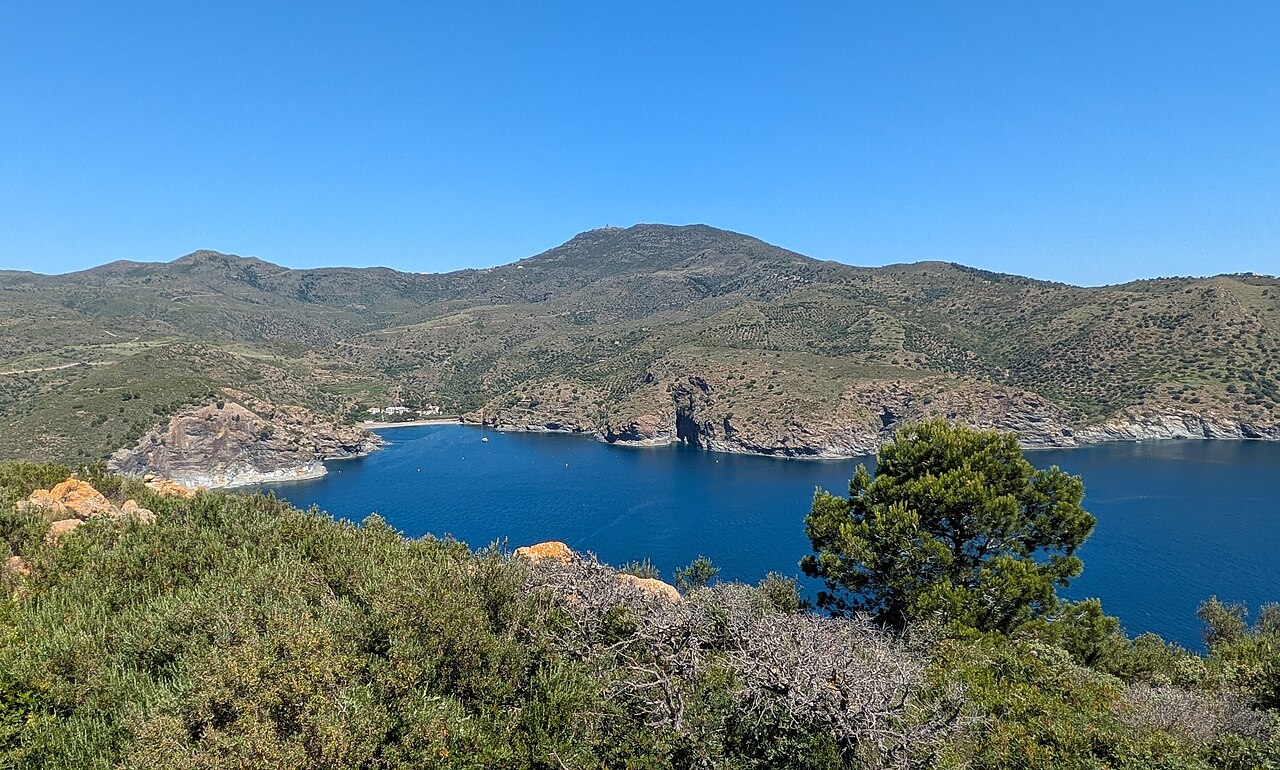
At the end of the summer season in 2009, the family who run the only building at Cala Joncols collected every wine on their restaurant list, put the bottles into a single steel cage, and sank it in the bay. They wanted to know what the sea would do to the wine. Seventeen years later the underwater cellar is still there, the family is still there, and the cove is still, in every practical sense, a single business at the end of a dirt track. Cala Joncols is not a beach with a hotel on it. It is a hotel that happens to have a beach.
One Family, One Building, One Cove
The Gómez Fernández family have run the hotel at Cala Joncols since 1955, next to an old fishermen’s refuge that still stands. They started out selling what they caught. Over the decades the operation grew sideways rather than upwards: a dive centre of their own, kayaks, a boat that both fishes for the restaurant and runs as a sea taxi, a vineyard, a vegetable garden, a pool.
That single fact explains everything about a day here. There is no chiringuito competing with another chiringuito, no second car park, no shop. The bar on the sand, the restaurant, the dive tanks, the kayak on the water and the boat that brought the day-trippers all belong to the same family. If they are closed for the season, the cove has nothing on it at all.
It has also pushed them somewhere unusual. Cala Joncols was the first hotel on the Costa Brava to hold Biosphere certification and the first business in the province of Girona to run a zero-waste system, with an on-site composter that turns the restaurant’s food waste into fertiliser for the vineyard and the garden. Being fourteen kilometres past the last tarmac gives you a strong incentive to deal with your own rubbish.
The Cellar on the Seabed
The 2009 experiment turned into a permanent one. The idea behind ageing wine underwater is that the seabed does, for free, what a good cellar does expensively: holds a constant low temperature, blocks light entirely, keeps humidity at maximum, and adds the slow, continuous movement of the water — which a cellar cannot do at all.
Whether the result is better wine or simply different wine is an argument you can have over a bottle of it in the restaurant, which is very much the point. What is not in dispute is that it is a genuinely odd thing to find at the bottom of an unpaved forestry track in a natural park, and that no other beach on this coast has one.
What the Cove Is Like
Small, and dark. The shore is dark sand mixed with smooth rounded stones — bolos — and the seabed falls away steeply almost immediately, the same profile as neighbouring Montjoi. Good for diving, good for a proper swim two strokes from shore, worth a thought if you are not a confident swimmer.
The cove faces southeast and is more exposed than Montjoi, so moderate swell is normal rather than exceptional. One correction while we are here: you will read that the usable sand changes with the tide. It does not — the Mediterranean on this coast moves about twenty centimetres. What changes the sand is winter storms, which strip it and pile it back over the following months.
It stays quiet even in August, which is entirely a function of the road. There is a marked swimming zone, a floating dock, a children’s water platform and bins. Camping, open fires, dogs and vehicles on the beach surface are all prohibited — this is a protected natural park, and the cove holds EMAS and ISO 14001 environmental certification.
Diving and the Water
This is what most people actually come for. Rock walls, a fast drop-off and water inside a protected park make the bay of Joncols one of the better dive sites on this coast, and the hotel’s own dive centre knows every corner of it — they have been diving this bay for decades, and they were putting a wine cage on the bottom of it long before anyone else thought of the idea.
Kayaks are rented on site and the coastline either side is spectacular from the water: this is the southern flank of Cap Norfeu, essentially undeveloped. Snorkelling close in is good along the rocky margins, less interesting over the sand.
How to Get to Cala Joncols
By Car
Follow the coastal road from Roses signposted to Cala Joncols, fourteen to eighteen kilometres depending where you start. The final six kilometres are unpaved: a stony forestry track with potholes, entirely passable at low speed in an ordinary car but genuinely unpleasant in anything low-slung. Take it slowly and accept that it will take longer than the map says.
There is no road from Cadaqués. The only vehicle access is from the Roses side; the map’s suggestion that you can cut across is wrong.
The Summer Access Restriction
This is the part missing from every English-language page about Joncols, and it can end a day out before it starts. From 1 July to 31 August 2026, the Ajuntament de Roses closes the road serving its coves inside the Cap de Creus natural park to vehicles of four wheels or more, every day between 09:30 and 16:00. The barrier and control point stands at the spot called Torre del Sastre, on the carretera de Montjoi — the road you take to reach Joncols. Motorbikes, bicycles and anyone on foot are unaffected, and outside those hours the road is open to everyone.
The exemption that matters here is the one for customers of businesses inside the park, who pass the control point on production of their booking. At Joncols there is only one business, so a room or a table at the hotel is, in practice, your pass. Cars and vans registered in Roses also go through on production of a current road-tax receipt, and owners, tenants and workers use a signed declaració responsable on the council’s standard form.
One thing we have not been able to confirm from an official document is precisely where the Joncols turning sits in relation to the Torre del Sastre barrier. The council publishes the barrier’s location and the list of coves the scheme covers, but not a map of which side tracks fall behind it. If you intend to drive out in July or August without a reservation, ring the hotel before you set off rather than finding out at the control point.
There is a second layer above all of this. When the Cos d’Agents Rurals raises Pla Alfa to level 4, the extreme forest-fire rating, access to the coves between Punta Falconera and Jóncols is limited to vehicles holding a booking document, and the restriction is extended to cyclists and walkers. Jóncols is named explicitly in the council’s notice. The camí de ronda linking the coves is closed too, from Punta de la Figuerassa at l’Almadrava as far as Jóncols, because it runs through dense pine. On a hot, dry, windy day in August, the track is not the only thing that can stop you.
By Sea Taxi
The hotel runs a paid boat service linking the cove with Roses, Cadaqués and Cala Montjoi. It avoids the track completely and it is the civilised way to arrive. Check schedules and availability with the hotel directly before planning a day around it.
On Foot
Trails through the Cap de Creus park reach the cove, and walking in from Montjoi around Cap Norfeu is a serious and beautiful day out. There is no shade, no water on the route and no bus at either end, so plan it properly.
Map
Eating and Sleeping at Joncols
One restaurant, and it is better than it has any right to be at the end of a dirt road: km-0 cooking built around rice and fresh fish, some of it landed by the hotel’s own boat, with vegetables from the garden behind. There is a beach bar on the sand for the simpler version, with live music some summer evenings. If you are not eating with them, bring your own food, because there is no alternative within fourteen kilometres.
To sleep, there is exactly one option and it is deliberately austere in the ways that matter: around thirty rooms, no televisions, and little to no mobile coverage — the hotel makes a selling point of being possibly the only one on the Costa Brava where your phone does not work. There is Wi-Fi, a pool and a garden with the bay in front of it. The season runs roughly April to November; outside it, the cove empties completely.
For anything more conventional you are back in Roses, with the sea taxi or the track connecting you for day trips. Cala Montjoi is the halfway house — wilder than town, far easier to reach than here — and Cala l’Almadrava is the fully serviced family option near Roses itself.
When to Go
The variable at Joncols is not the weather or the crowd. It is whether the family is open. Their season runs roughly April to November, and outside it there is no bar, no restaurant, no dive centre, no boat and no reason to drive six kilometres of track unless you specifically want an empty beach and are carrying everything you need.
Inside the season, June and September are the sweet spot — warm water, the whole operation running, and the boat traffic thinner than in August. Summer Sundays are the busiest the cove ever gets, because that is when boats arrive from Roses and Cadaqués; a weekday in the same week is a different place. May and October are for divers and walkers rather than swimmers.
For how Joncols compares with the rest of the region, see our Costa Brava beach rankings.
Practical Tips
- Check the hotel is open before you set off. It is the only service at the cove, and its season is roughly April to November.
- In July and August, book or arrive outside 09:30–16:00. The road to the Roses coves is closed to cars in that window; a hotel or restaurant reservation gets you through the barrier.
- Take the track slowly. Six unpaved kilometres, stony and potholed; low-slung cars will not enjoy it.
- Don’t expect phone signal. Tell someone where you are going and download your map first.
- Go on a weekday. Summer Sundays bring the boats and are the busiest the cove gets.
- Leave the dog at home. Dogs are prohibited on the beach; the hotel’s own pet policy is a separate matter to check with them.
Written for general information, not as travel, legal or safety advice. Cala Joncols is reached by six kilometres of unpaved forestry track inside a protected natural park; drive it slowly and be aware that mobile coverage is poor to nonexistent, which matters in an emergency. The seabed shelves steeply and the cove is exposed to southeasterly swell. All services at the cove belong to a single seasonal business — opening dates, the sea taxi and the dive centre can change without notice. Camping, fires and dogs are prohibited on the beach. Check current details with the Ajuntament de Roses and the Parc Natural de Cap de Creus before travelling.
Sources
Checked against the administrations’ own publications on 27 August 2026.
- The summer vehicle restriction. Ajuntament de Roses — Restriccions de l’accés amb vehicle a les cales de Roses durant l’estiu, updated 1 July 2026. Source for the 2026 dates (1 July to 31 August), the hours (09:30 to 16:00, every day), the four-wheel threshold, the barrier’s position at Torre del Sastre, and the list of exempt cases, including customers of park businesses showing a booking and vehicles registered in Roses showing a road-tax receipt. The full plan for the 2026 season and the declaració responsable form are published alongside it.
- Pla Alfa level 4. Same council page for the Cap de Creus consequences, which name Jóncols among the coves closed and extend the closure to cyclists and walkers and to the camí de ronda between Punta de la Figuerassa and Jóncols. The daily rating is published by the Cos d’Agents Rurals at Pla Alfa.
- No bus to the coves. Generalitat de Catalunya, Parc Natural de Cap de Creus — questions on the Roses access regulation (PDF). The park states that no specific public transport has been provided for the coves and that hiring a taxi in Roses is the alternative.
- What we could not verify. Where the Jóncols turning sits in relation to the Torre del Sastre barrier; no official document we could find maps the side tracks against the control point. Also unverified from an official or primary source: the 1955 founding date and the family’s continuous tenure, the 2009 date for the first underwater wine cage, the Biosphere and zero-waste claims, the EMAS and ISO 14001 certification, and the number of rooms — published figures give both around thirty and thirty-four. These come from the business itself and from trade coverage, and they are the business’s own account rather than an independent record.
- The tide point. The claim that usable sand at Joncols changes with the tide does not survive contact with the tidal range on this coast, which is of the order of twenty centimetres. Winter storms move the sand; the tide does not. This is one of the errors listed on our corrections page.
- A standing caution. Roses describes its access plan as adaptive, and the dates, the hours and the barrier’s position have all moved between seasons. Every service at this cove belongs to one seasonal business. Confirm both before travelling.
Image Credits
- Header image: Cala i badia de Jóncols by Alan Mattingly, released under CC0 1.0, via Wikimedia Commons.
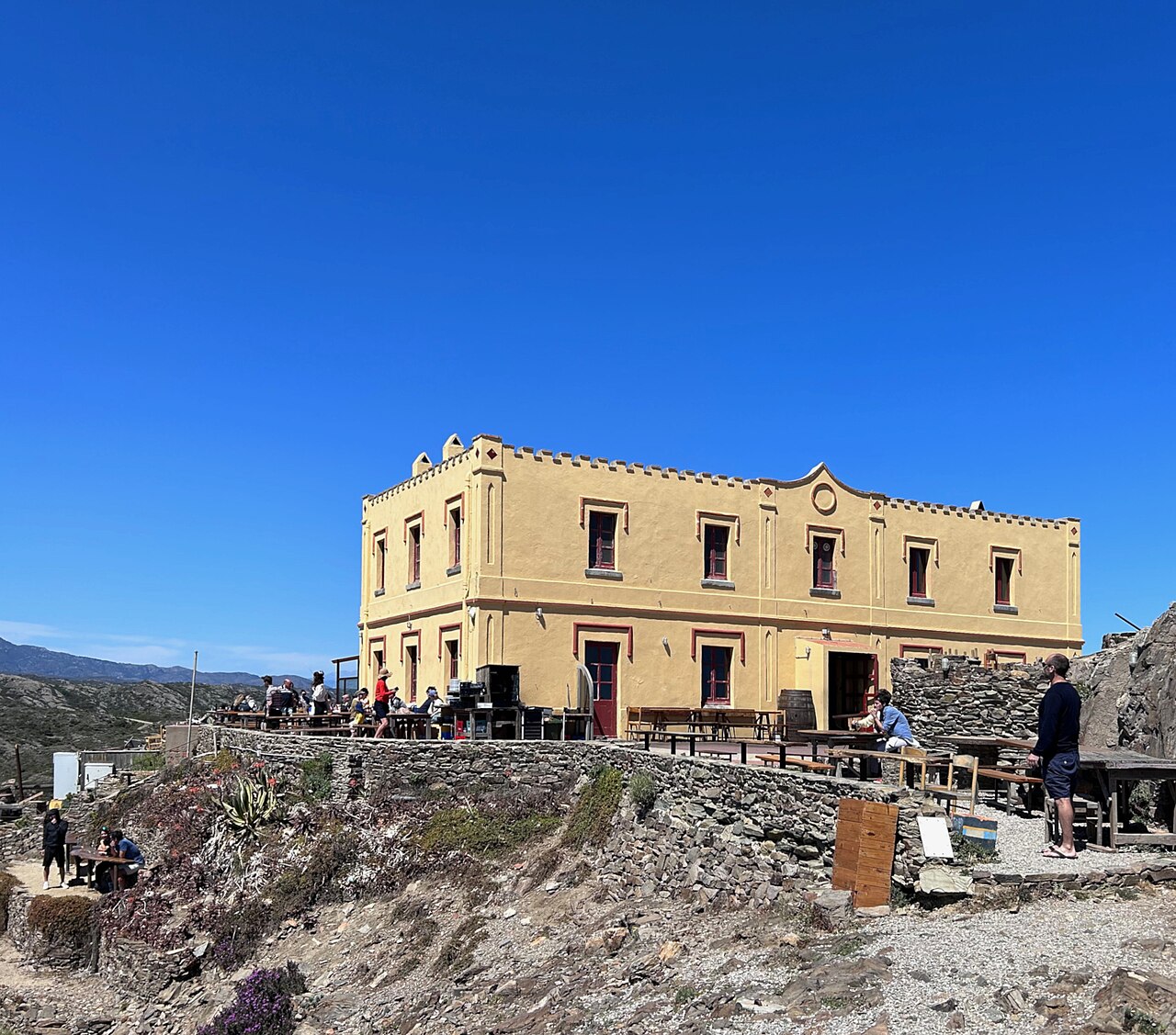
- In-article image: Cap de Creus by Adrian Michael, licensed under CC BY-SA 4.0, via Wikimedia Commons. Shows the Cap de Creus coastline, not Cala Joncols itself.
Leave a Reply