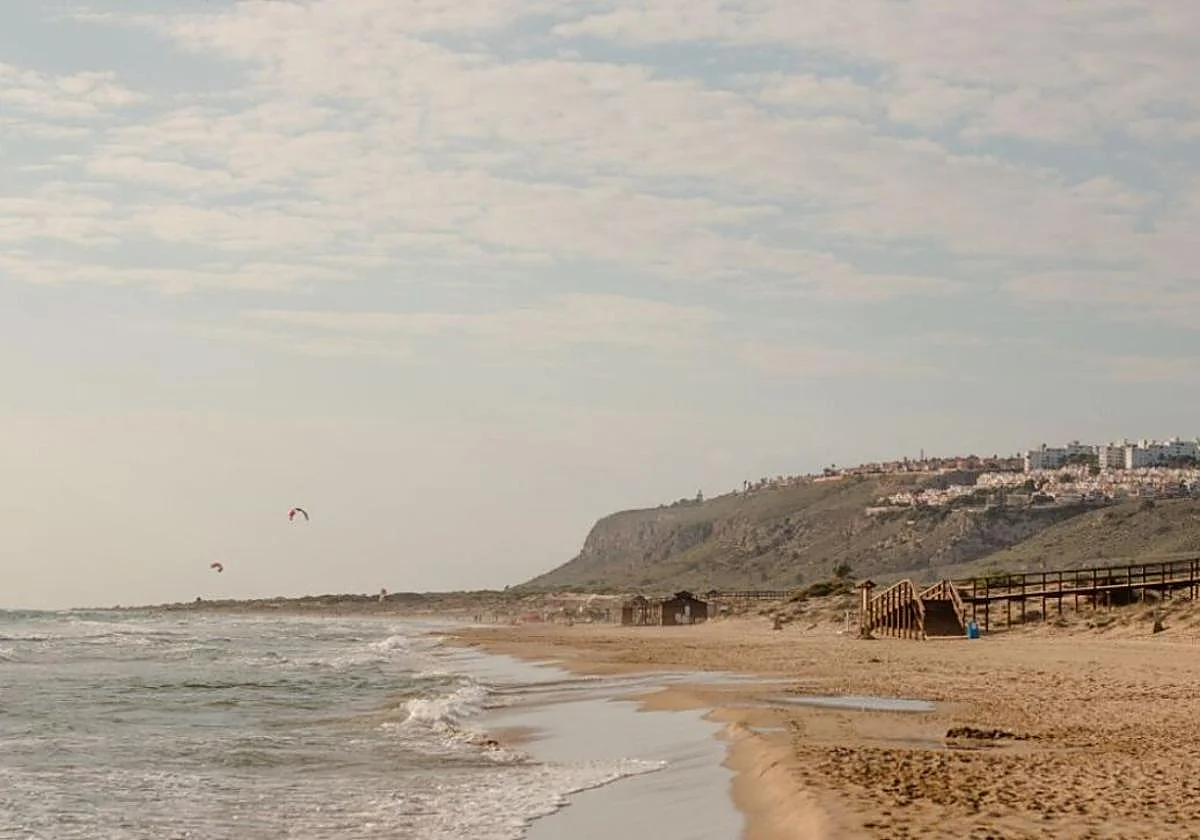
Not every beach near Alicante’s busiest resort towns feels like a resort town. Playa del Carabassí, tucked at the foot of its namesake mountain range between Santa Pola and Arenales del Sol, manages to stay genuinely wild despite sitting just a short drive from the city of Elche and Alicante airport. Golden sand, tall dune systems, pine groves, and a long wooden boardwalk system protecting fragile vegetation make this one of the more ecologically significant beaches on this stretch of the Costa Blanca — and one of the few in the area where nudism is officially permitted on part of the shore. If you want the urban counterpart to this stretch of coast, Playa de San Juan just to the north offers similar sandy scale with far more services.
This guide covers what the beach is actually like, the best things to do on the sand, in the dunes, and on the water, how to get there and where to park, where to eat and stay nearby, and the best time of year to visit.
Where Is Playa del Carabassí?
Playa del Carabassí sits within the municipality of Elche, in the province of Alicante, right at the boundary with Santa Pola, and just south of the Arenales del Sol urban beach. It lies at the foot of the Sierra del Carabassí, with the protected wetland areas of Els Bassals and Clot de Galvany sitting just inland — a detail that explains much of the beach’s ecological character.
Despite being only around 20 kilometers from Alicante and a short drive from Alicante-Elche airport, the beach retains a notably untouched, semi-wild feel thanks to its dune protection measures and relative isolation from dense urban development.
What the Beach Is Actually Like
Carabassí is defined by its dune system. The beach itself runs somewhere between 900 meters and just under 2 kilometers depending on where you draw the boundary with neighboring beaches, with a width of around 80 meters of fine, golden sand. Behind the shoreline rises a landscape of high active dunes, older fossil dunes, and pine groves (mainly Aleppo pine and stone pine), all part of a protected coastal ecosystem with real geological and environmental value.
The water is generally calm, with moderate swell depending on conditions, and is clear enough for decent snorkeling toward the southern end of the beach, where the sand gives way to a rockier stretch. Birdwatchers will also find the area rewarding, since the beach and its adjoining wetlands attract wading and shorebird species such as plovers and sandpipers.
One detail that sets Carabassí apart from most beaches on this list: a section toward the south is officially designated for nudism, a status the beach has held for years as part of its broader ecological protection, though both nude and clothed bathers are commonly seen mixing on busier days.
Things to Do at Playa del Carabassí
Windsurfing and Kitesurfing
Carabassí’s open exposure and consistent wind conditions make it one of the better spots in the area for windsurfing and kitesurfing, with conditions that suit intermediate to advanced riders particularly well.
Walking the Dune Boardwalks
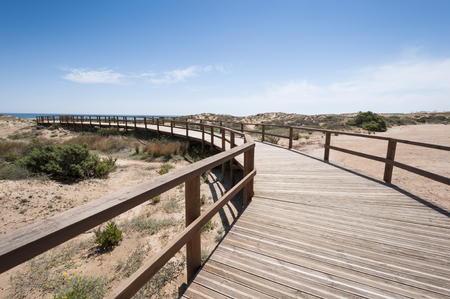
A network of numbered wooden boardwalks (roughly 1 through 6) crosses the dune system between the parking areas and the beach, both protecting the fragile dune vegetation and offering some of the best views on this stretch of coast back toward the Isla de Tabarca and the Sierra del Carabassí itself, topped by the Santa Pola lighthouse.
Birdwatching and Nature Walks
The dunes and the nearby Clot de Galvany wetland are home to small reptiles, rabbits, foxes in the quieter stretches, and a healthy population of coastal birds. Walking the trails behind the beach, away from the main bathing areas, is a worthwhile detour for anyone interested in the area’s ecology.
Snorkeling
Toward the southern end of the beach, where it curves and the seabed turns rockier, snorkeling conditions improve noticeably compared with the open sandy stretches further north.
Beach Characteristics at a Glance
- Type of shore: Fine, golden sand backed by active and fossil dune systems
- Length: Approximately 900 m to 2 km, depending on the exact boundary used
- Width: Around 80 meters
- Water: Generally calm with moderate swell; clearer and rockier toward the south
- Blue Flag status: Awarded, reflecting the beach’s water quality and environmental management
- Naturist area: An officially designated nudist section exists toward the south
- Accessibility: Wheelchair-accessible sections exist, though it’s advisable to confirm current ramp and boardwalk conditions with the town hall before visiting
How to Get to Playa del Carabassí
By Car
From Alicante, take Avenida de Elche and follow signs toward Urbanova and El Altet, continuing along the N-332 toward Arenales del Sol; Carabassí lies just beyond it, before reaching Santa Pola. There are three parking areas along Avenida San Bartolomé de Tirajana and the smaller Camino del Carabassí, all free and unguarded, with capacity for over 100 vehicles combined. The first two connect to the beach via the wooden boardwalks; from the third, visitors cross the dunes on foot without a boardwalk.
By Bus
The Alicante–Santa Pola intercity bus line stops within about 2 kilometers of the beach. In summer, additional local services run from Santa Pola and, seasonally, from Elche via El Altet and Arenales del Sol.
By Bike
A bike lane currently covers the first stretch from Alicante, with plans to extend it further toward Urbanova; cyclists should take care once the dedicated lane ends.
Map
Where to Eat Near Playa del Carabassí
A seasonal beach kiosk (chiringuito) operates directly on the sand for drinks and light bites. For a fuller meal, nearby Gran Alacant and Arenales del Sol offer a wider range of restaurants and beach bars, while the city of Elche, a short drive inland, has a far broader selection of traditional Alicantine restaurants for those willing to make the trip.
Where to Stay Near Playa del Carabassí
Most visitors base themselves in nearby Gran Alacant, a residential and tourist development between the Sierra del Carabassí and the beach, or in Arenales del Sol just to the north, both offering apartments and hotels within easy reach of the sand. Travelers who prefer staying in a larger city can base themselves in Elche or Alicante and treat Carabassí as a day-trip beach, given the relatively short drive from either. Boats to the Isla de Tabarca depart from the nearby port of Santa Pola, making it easy to combine both in a single trip.
Best Time of Year to Visit
Summer brings warm water (around 27°C) and the liveliest atmosphere, but also the highest occupancy of any season here, particularly on weekends when the limited free parking fills quickly. Spring and early autumn offer a quieter dune-walking and birdwatching experience, with water still comfortable for swimming well into October. Winter water temperatures drop to around 16°C, making this primarily a walking and nature-watching destination outside the warmer months.
| Month | Water Temp (approx.) | Crowd Level | Best For |
|---|---|---|---|
| April–May | 18–20°C | Low | Dune walks, birdwatching |
| June | 22–24°C | Moderate | Swimming, windsurfing |
| July–August | 26–27°C | High | Full beach day, kitesurfing |
| September | 24–25°C | Moderate | Warm water, fewer crowds |
| October | 22–24°C | Low | Mild swimming, walking |
| November–March | 14–17°C | Very Low | Walking, nature watching |
Services and Facilities
- Lifeguard service during the bathing season (June 1 to mid-October, plus Easter week)
- Public restrooms and foot-washing stations near the main access points
- Sunbed and umbrella rental in season
- Seasonal beach kiosk
- Free parking areas (unguarded, over 100 spaces combined)
- Numbered wooden boardwalks over the dunes
- Designated dog beach area further south, beyond the nudist section
Smoking on the sand, lighting fires, and camping are all prohibited; dogs are not permitted on the main bathing section during summer months.
Practical Tips for Visiting Playa del Carabassí
- Stick to the boardwalks when crossing the dunes. This is a protected ecosystem, and walking off the marked paths damages the fragile vegetation that holds the dunes in place.
- Bring your own shade if you want it. Beyond the pine groves set back from the shore, much of the open beach has little natural shade.
- Arrive early on summer weekends. The free parking areas, while reasonably sized, fill up quickly once the weather turns warm.
- If nudism isn’t your preference, head toward the northern stretch. The designated naturist area is toward the south of the beach, near the boundary with Santa Pola.
- Pack water and sun protection for dune walks. There is little shade once you’re away from the pine groves, and the sandy terrain makes for a slower, hotter walk than it looks.
Frequently Asked Questions
Is Playa del Carabassí good for families with children?
Yes, particularly toward the calmer, more sheltered northern stretch. The dune boardwalks also make for an easy, scenic walk that works well with kids.
Is nudism allowed on the whole beach?
No. Only a specific section toward the south is officially designated for nudism; the rest of the beach operates as a standard, clothed bathing area.
Is parking free at Playa del Carabassí?
Yes. The parking areas along Avenida San Bartolomé de Tirajana and Camino del Carabassí are free, though unguarded and prone to filling up on summer weekends.
Is the beach suitable for wheelchair users?
Some sections offer accessible routes, but conditions can vary, so it’s worth confirming current accessibility with the Ayuntamiento de Elche before visiting if this is a key requirement.
This article is provided for general informational purposes only and does not constitute professional, legal, safety, or travel advice. Beach conditions, parking availability, lifeguard season dates, and local regulations can change without notice; always check official sources, including the Ayuntamiento de Elche, before planning your visit. Always follow posted safety guidance, lifeguard instructions, and dune-protection signage where available.
Leave a Reply