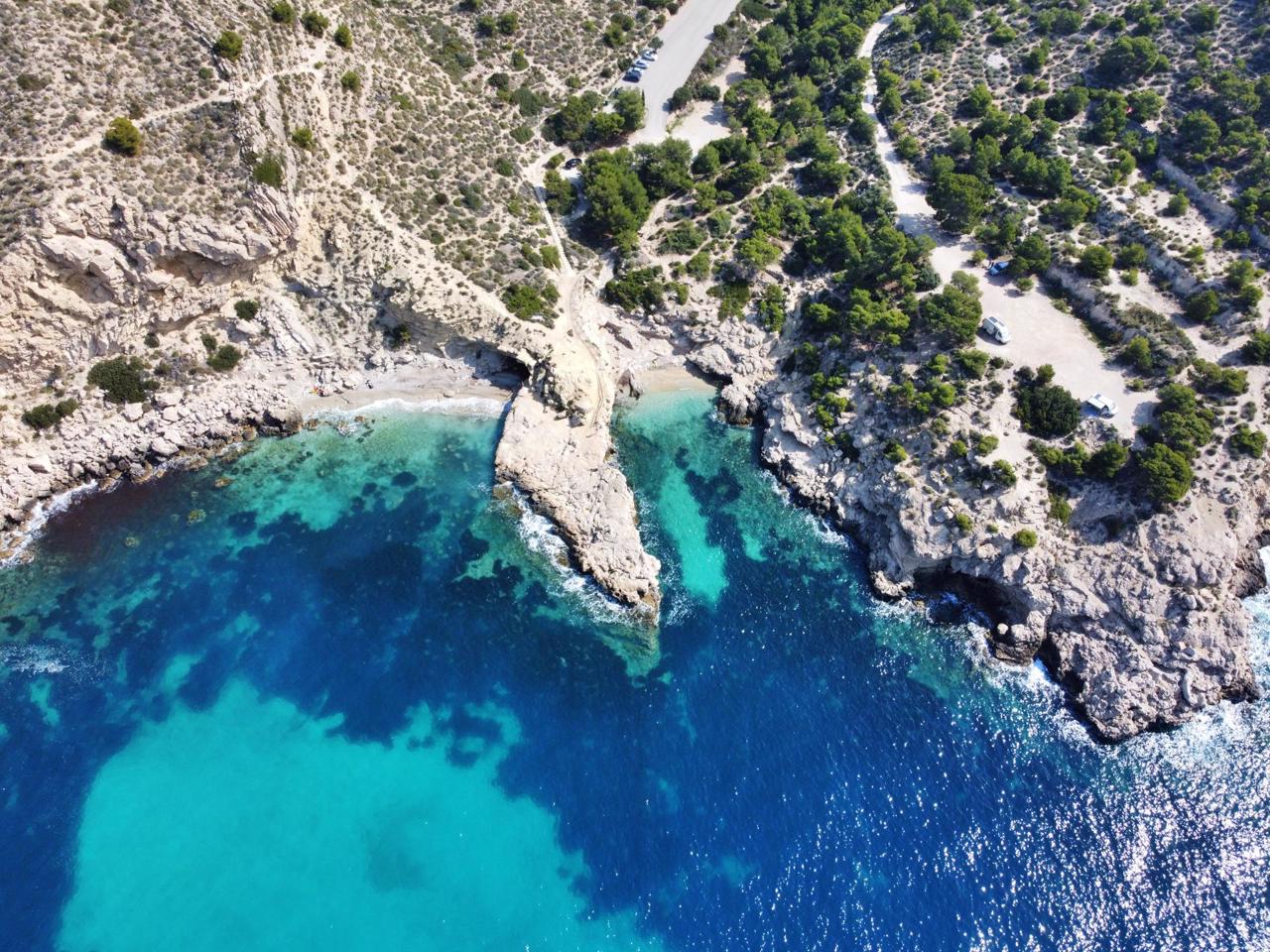
Tucked between rocky cliffs on the northern stretch of Villajoyosa’s coastline, Racó del Conill is one of the more distinctive coves on this part of the Costa Blanca — not for its size, which is genuinely tiny, but for everything that surrounds it. Pine-covered hills, a striking rock formation splitting the cove in two, water clear enough to rival some of the better-known coves further north, and a naturist tradition dating back to the 1970s all combine to make this a memorable, if crowded, stop.
This guide covers what the cove is actually like, what there is to do in and around the water, how to get there and where to park, what to know about its naturist tradition, and the best time of year to visit if you want to avoid its most packed days.
Where Is Racó del Conill?
Racó del Conill sits on the northern coastline of Villajoyosa (La Vila Joiosa), in the province of Alicante, around 3 to 5 kilometers from the town’s center, on the road toward Benidorm. This stretch of coast is known locally for its tall cliffs and small, hard-to-reach coves — a contrast with the long, developed beaches further south in Villajoyosa proper.
The cove sits close to the boundary with El Campello and within easy reach of Benidorm and the Cala de Finestrat, making it a popular stop for visitors exploring this entire stretch of coastline in a single day.
What the Beach Is Actually Like
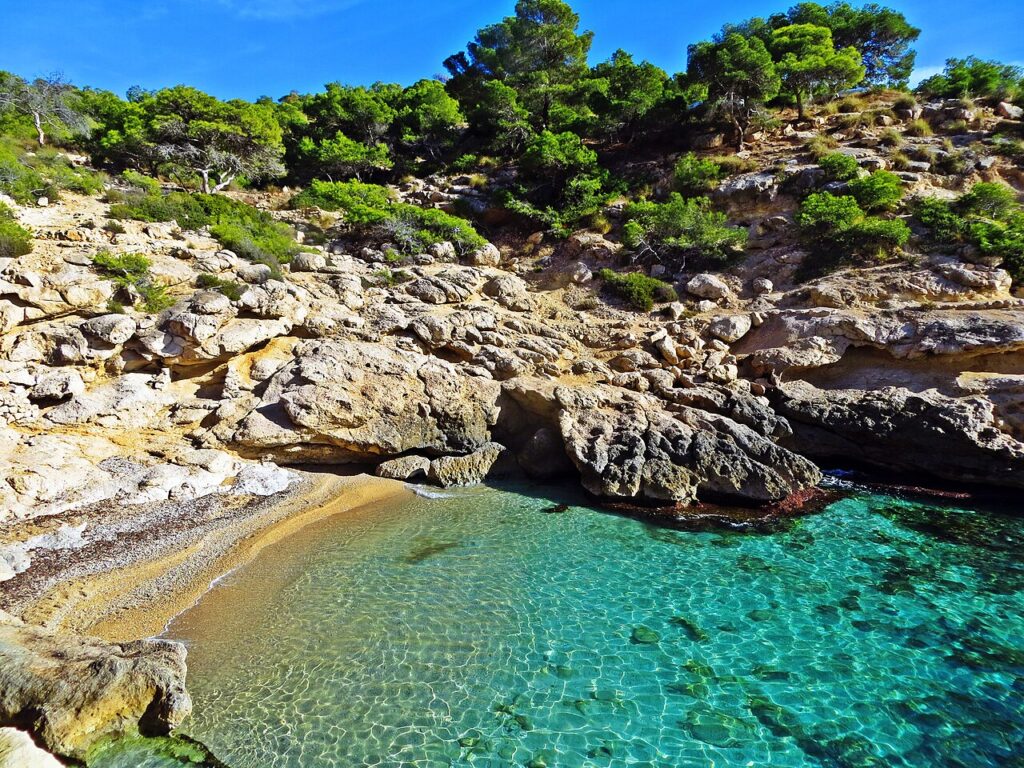
Racó del Conill is small — most sources put it at somewhere between 80 and 160 meters in length and just a handful of meters wide, depending on exactly where the boundary is drawn. A prominent rocky outcrop splits the cove into two distinct sections, one noticeably larger than the other, giving it a layered, sheltered feel despite its modest size.
The shoreline alternates between smooth pebbles, rock, and patches of sand, so water shoes are genuinely recommended here. What the cove lacks in soft sand, it makes up for with water clarity: the turquoise, transparent water here is consistently praised, and the surrounding cliffs and pine forest give it a notably wild, undeveloped feel that’s become increasingly rare on this part of the coast given how much of the surrounding area has been built up.
Racó del Conill has carried a naturist tradition since the 1970s, and the Ayuntamiento de Villajoyosa has historically supported this identity through official signage at the site (in Valencian: “Al Racó, millor en conill, naturalment” — roughly, “At Racó, better in the nude, naturally”) under municipal beach regulations. In practice, the cove’s growing popularity on social media in recent years has brought a noticeably larger share of clothed visitors, and both clothed and nude bathers are now commonly seen sharing the same small stretch of coast. Whichever you prefer, it’s worth knowing this context before you go, since the cove’s identity and crowding levels are closely linked.
Things to Do at Racó del Conill
Snorkeling
The clear water and rocky terrain around the central outcrop make this one of the better casual snorkeling spots in the area, with good visibility for spotting fish and marine life close to shore. Bringing your own mask and snorkel is recommended, since there’s no rental available on site.
Cliff Jumping
The rock formation dividing the cove offers a few spots for jumping into the water at varying heights — a popular activity here, though as with any cliff jumping, checking water depth and conditions first is essential.
Hiking the Colada de la Costa Trail
A coastal walking path known as the Colada de la Costa connects Racó del Conill with Playa del Torres and the 16th-century Torre del Aguiló watchtower, built under Felipe II as part of the area’s historic coastal defense network against piracy. The walk offers some of the better cliffside views on this stretch of coast.
Paddleboarding and Kayaking
The cove’s generally calm water (no significant swell under normal conditions) makes it a reasonable spot for paddleboarding or kayaking, though without rental facilities on site, you’ll need to bring your own equipment.
Spotting a Film Location
Racó del Conill has appeared as a filming location in several productions, including Son of the Pink Panther (1993) and Astérix at the Olympic Games (2008), along with scenes from the British sitcom Benidorm — a fun bit of trivia for film buffs visiting the area.
Beach Characteristics at a Glance
- Type of shore: Mixed pebbles, rock, and patches of sand
- Length: Approximately 80–160 meters, depending on the source
- Width: Narrow, just a few meters in most places
- Water: Clear, turquoise, generally calm with moderate swell possible
- Blue Flag status: Not awarded, likely due to its isolated, undeveloped character
- Naturist tradition: Official since the 1970s, supported by municipal signage, though increasingly mixed with clothed visitors
- Occupancy level: Can become very crowded in summer given the cove’s small size
- Accessibility: Not adapted for visitors with reduced mobility; the approach involves uneven terrain
How to Get to Racó del Conill
By Car
From Villajoyosa, follow the N-332 toward Benidorm; the access road to the cove is narrow but signposted, near the area of an old, abandoned casino building. The final stretch toward the parking area is on a fairly tight road, so cautious driving is advisable, particularly when passing oncoming traffic.
Parking is free, located along the sides of the access road, with capacity generally estimated between 50 and 100 vehicles. Arriving early is strongly recommended in summer, since both the parking and the tiny cove itself fill quickly once the morning gets underway.
On Foot
From the parking area, a short walking path leads down to the cove. It’s described as a relatively easy access for a hidden cove of this kind, though there’s no formal walkway, so footwear suited to uneven ground is a good idea.
By Public Transport
There is no direct bus service to Racó del Conill. Visitors without a car typically rely on taxis from Villajoyosa or Benidorm, or combine the visit with a longer coastal walk from a nearby beach.
Map
Where to Eat Near Racó del Conill
A seasonal beach kiosk (chiringuito) operates directly at the cove, serving drinks and casual food, with reports of friendly, helpful service from several recent visitors — though some long-time visitors have noted that its presence, including occasional music, has changed the cove’s once-fully-wild atmosphere. For a fuller meal, Villajoyosa’s town center, a few kilometers away, offers a strong selection of traditional Alicantine seafood restaurants, particularly known for fresh fish, rice dishes like arròs a banda, and the local coca de verduras.
Where to Stay Near Racó del Conill
Most visitors base themselves in Villajoyosa itself, which offers a range of hotels and apartments along with easy access to the town’s well-known colorful waterfront. Cala de Finestrat, slightly further along the coast toward Benidorm, is another common base for travelers who want to combine a stay near several coves and beaches in this stretch of the Marina Baixa.
Best Time of Year to Visit
Given how small the cove is, summer crowding is a real factor here — several visitor accounts describe the beach as packed nearly to capacity on warm days, which can undercut the secluded, wild feel that draws people here in the first place. Arriving early in the morning, or visiting in the shoulder seasons of late spring and early autumn, offers a noticeably calmer experience while keeping the water comfortably warm for swimming and snorkeling.
| Month | Water Temp (approx.) | Crowd Level | Parking Difficulty |
|---|---|---|---|
| April–May | 18–20°C | Low | Easy |
| June | 22–24°C | High | Difficult |
| July–August | 26–27°C | Very High | Very Difficult |
| September | 24–25°C | Moderate | Moderate |
| October | 22–24°C | Low | Easy |
| November–March | 14–17°C | Very Low | Easy |
Services and Facilities
- Seasonal beach kiosk (chiringuito)
- Free roadside parking (estimated 50–100 spaces)
- No showers, changing facilities, or restrooms on site
- No lifeguard service reported
- No equipment rental on site (bring your own snorkel, paddleboard, etc.)
Dogs and motorhomes are not permitted at the cove or its access road.
Practical Tips for Visiting Racó del Conill
- Arrive early, especially in summer. Both the cove and the roadside parking fill quickly once the day warms up.
- Bring water shoes and your own snorkel gear. There are no rental facilities, and the mixed pebble-and-rock shoreline makes proper footwear genuinely useful.
- Know before you go that this is a traditionally naturist cove. Official municipal signage encourages nude bathing as part of the cove’s long-standing identity, though clothed visitors are common in practice — go with whichever you’re comfortable with, and be respectful of others’ choices either way.
- Bring everything you need. With no shops, restrooms, or showers on site beyond the seasonal kiosk, come prepared.
- Drive carefully on the access road. It’s narrow, and passing oncoming traffic requires some care.
Frequently Asked Questions
Is Racó del Conill a nudist beach?
It has an official naturist tradition dating back to the 1970s, supported by municipal signage. In recent years, growing popularity has brought more clothed visitors, so in practice both nude and clothed bathing are commonly seen.
Is Racó del Conill good for snorkeling?
Yes. The clear water and rocky terrain around the central outcrop make it a popular casual snorkeling spot, though there’s no equipment rental on site.
Are dogs allowed at Racó del Conill?
No, dogs are not permitted at the cove.
Is there an entrance fee or parking fee?
No. Both the cove and the roadside parking are free, though spaces fill quickly in summer.
This article is provided for general informational purposes only and does not constitute professional, legal, safety, or travel advice. Beach access conditions, parking availability, and local regulations can change without notice; always check official sources, including the Ayuntamiento de Villajoyosa, before planning your visit. Always exercise caution around cliff areas and when cliff jumping, and check water depth and conditions beforehand.
Leave a Reply