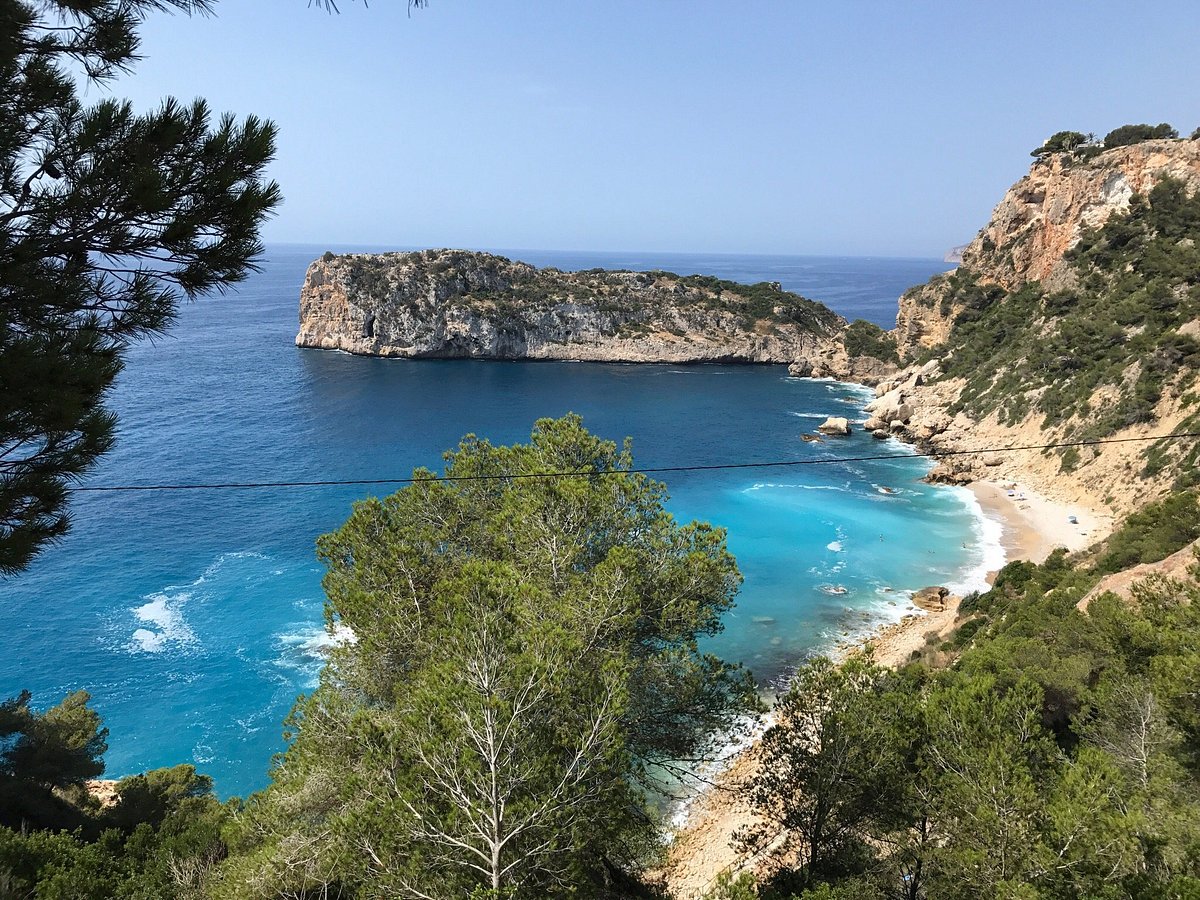
Before you start planning a visit: as of our most recent research, Cala Ambolo is officially closed to the public by the Ayuntamiento de Xàbia due to a genuine, ongoing rockfall risk along the cliffs and access path. The closure has been enforced for several years, with fencing, warning signage, and active security checks at the access point, and police have carried out enforcement actions, including removing people from the cove, as recently as 2025. We’re covering this beach for informational and historical purposes, and because the viewpoint above it remains open and worth visiting — but we are not providing directions to the cove itself, and we’d strongly encourage you not to attempt access while the closure is in effect.
Where Is Cala Ambolo?
Cala Ambolo sits on the southern coastline of Jávea (Xàbia), in the province of Alicante, between the better-known Cala de la Granadella and Cala del Portitxol, close to the Cabo de la Nao. It lies at the base of dramatic cliffs over 100 meters high, at the foot of the Punta de Ambolo headland, with the protected Isla del Descubridor sheltering it from southerly winds and swell just offshore.
The cove takes its name, like several other landmarks in this stretch of Jávea, from a 16th-century watchtower — the Torre d’Ambolo — built to watch for pirate raids along this part of the coast, much like the towers overlooking Granadella and El Portitxol.
What the Cove Was Like, and Why It’s Closed Today
By most historical accounts, Cala Ambolo was a small, strikingly beautiful cove of fine gravel and pebbles, roughly 120 to 300 meters in length depending on the source, with exceptionally clear, turquoise water sheltered by the Isla del Descubridor. It was traditionally one of the only officially recognized naturist beaches on this stretch of the Costa Blanca, and its remote, hard-to-reach location meant it stayed genuinely uncrowded for years, even as nearby coves like Granadella grew busier.
That same geography — steep, unstable cliffs above a narrow access path — is also exactly why the cove is closed today. Rockfalls along the descent path and the surrounding cliff face have made the access genuinely dangerous, and the Ayuntamiento de Xàbia closed the cove to the public as a preventive safety measure. The closure has remained in place for several years, with reinforced fencing and a security presence at the access point on Calle Igor Stravinsky during peak season, and visitors who bypass the barriers risk fines as well as real physical danger from falling rock. As of the most recent reporting we could find, no firm date has been set for reopening, and any future access would depend on the council completing stabilization work on the cliffs.
What You Can Still Do: The Mirador de Ambolo
The good news is that the best view of the cove doesn’t require setting foot on the beach itself. The Mirador de Ambolo, part of Jávea’s well-known Ruta de los Miradores (a circuit of 15 scenic viewpoints along the coastline), sits directly above the cove and offers sweeping views over the turquoise water, the Isla del Descubridor, and the cliffs of the Punta de Ambolo, with the Cabo de la Nao visible to the north and the Puig de la Llorença massif toward Benitatxell to the south.
The viewpoint is reached by car via the Cabo de la Nao road, turning onto Calle Torre d’Ambolo in the Costa Nova area — a short, easy drive with a small parking area and an information panel at the site. It’s a legitimate, safe way to see and photograph the cove without going anywhere near the closed access path.
Viewing the Cove by Boat or Kayak
Several local sources describe approaching Cala Ambolo from the sea — by kayak from nearby Cala del Portitxol, or on a guided boat excursion — as the safer way to experience the cove’s water and surroundings without using the closed land route. If you’re set on getting close to Ambolo, this is the more responsible option, since it avoids the unstable cliff path entirely.
Nearby Alternatives Worth Visiting Instead
Given the closure, most visitors to this part of Jávea head to one of several excellent nearby coves instead:
- Cala de la Granadella, a short drive north, offers similarly clear water in a sheltered bay, with full services, parking, and restaurants — read our complete guide to Cala de la Granadella.
- Cala del Portitxol, to the north as well, is known for its photogenic fishermen’s cottages and good snorkeling around its offshore islet — read our complete guide to Cala del Portitxol.
- Cala Blanca, also in the southern part of Jávea, is a smaller cove of sand and stone with generally easier, legal access.
Beach Characteristics at a Glance (Historical)
- Type of shore: Fine gravel and pebbles, with some sand
- Length: Approximately 120–300 meters, depending on the source
- Water: Clear, turquoise, sheltered by the Isla del Descubridor
- Historical designation: One of the few officially naturist beaches in Jávea
- Current status: Closed to public access since approximately 2020, with no confirmed reopening date
Frequently Asked Questions
Is Cala Ambolo open in 2026?
No. The cove remains officially closed by the Ayuntamiento de Xàbia due to ongoing rockfall risk, with no confirmed reopening date as of our most recent research. Always check current local sources before assuming this has changed.
Can you still see Cala Ambolo without breaking the closure?
Yes. The Mirador de Ambolo, reached by car via Calle Torre d’Ambolo, offers excellent views of the cove and is fully open to the public, unlike the beach itself.
What happens if you’re caught accessing the closed cove?
Local police have carried out enforcement actions at the site, including removing visitors from the cove. Beyond the legal risk, the closure exists because of a genuine, documented rockfall danger.
Is there a way to see Cala Ambolo legally and safely up close?
Approaching by kayak or boat from the sea, rather than via the closed land access, is generally described as the safer alternative for those who want to get closer to the cove.
This article is provided for general informational purposes only and does not constitute professional, legal, or safety advice. Cala Ambolo is currently closed to public access by order of the Ayuntamiento de Xàbia due to rockfall risk; this status can change, so always verify current conditions with official local sources before planning any visit to the area, and do not attempt to access a closed beach or cliff path under any circumstances.
Leave a Reply